

Unvented Cylinder Discharge Pipe Sizing: D1 And D2 Calculations For 300L Units
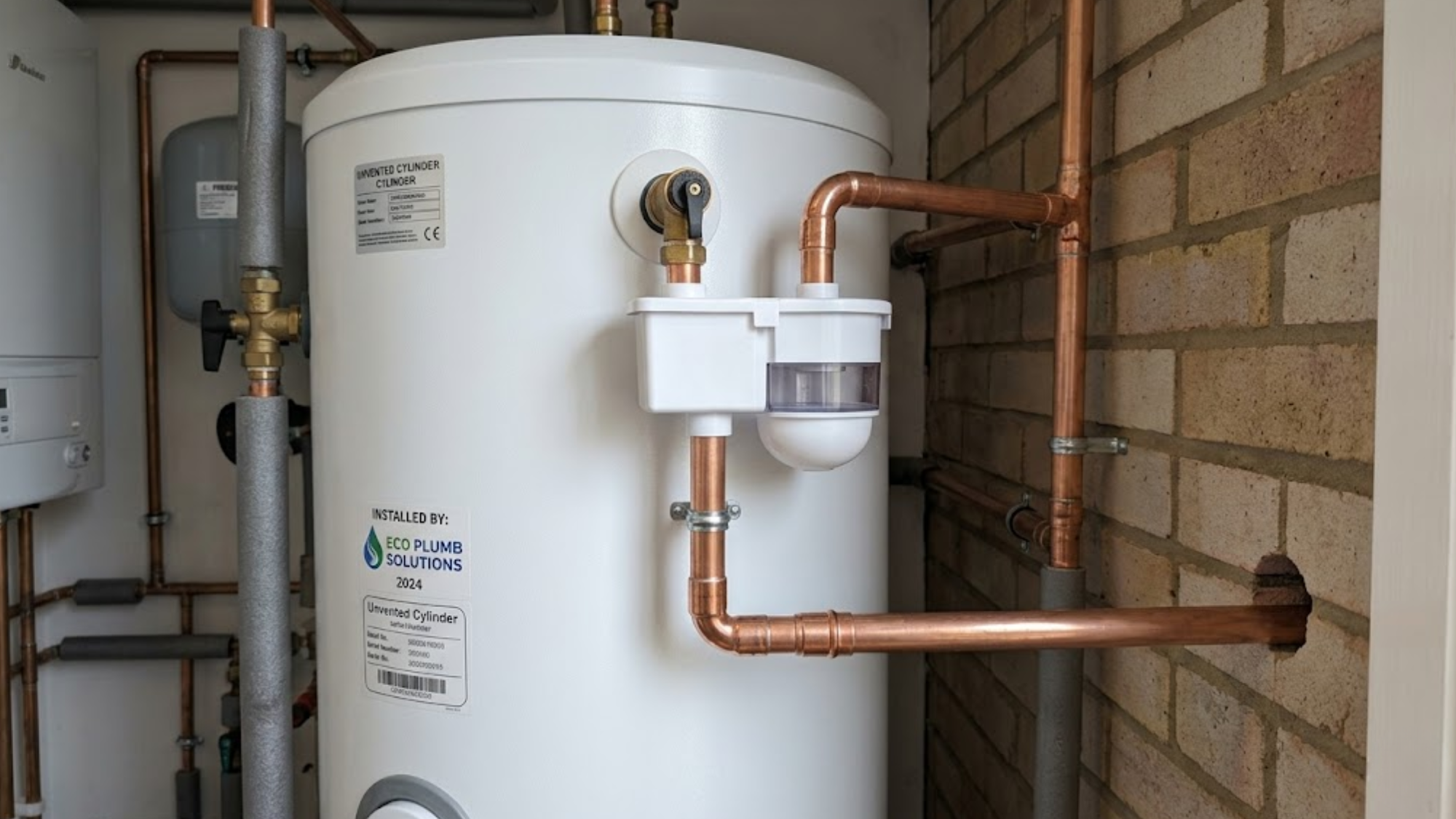
Unvented hot water cylinders operate under mains pressure, which means they need robust safety mechanisms to prevent catastrophic failure. The discharge pipes, designated D1 and D2 in technical standards, form your primary safety system when pressure or temperature exceeds safe limits. Executing accurate unvented cylinder discharge pipe sizing is not just about passing an inspection; it is about ensuring the system can fail safely without causing injury.
Think of the discharge pipe system like a fire exit in a crowded building. You hope you never have to use it, but if an emergency occurs, that exit must be wide enough to handle the volume and completely clear of obstructions. If you undersize the exit for a 300-litre cylinder, the pressure cannot escape fast enough, which compromises the integrity of the entire vessel.
Understanding Discharge Pipe Requirements for 300L Unvented Cylinders
A 300-litre cylinder represents the upper range of domestic installations and the lower end of light commercial applications. The discharge pipe sizing for these units follows specific requirements laid out in Building Regulations Approved Document G. Professionals at Heating and Plumbing World regularly support installers who must navigate these strict safety parameters to ensure building compliance.
The calculations for these units involve more nuance than many engineers realise. Because the volume of stored energy is significant, even minor errors in pipe diameter or vertical drop measurements can lead to dangerous back-pressure. Compliance with Building Regulations Approved Document G ensures that in the event of a control failure, the water is conveyed away from the property safely.
The Two-Pipe System: What D1 and D2 Actually Do
The D1 pipe connects directly from the temperature and pressure relief valve (TPRV) to the tundish. This short section handles the initial discharge when the valve opens, typically because water temperature has exceeded 95 degrees Celsius or pressure has breached 6 to 7 bar.
The D2 pipe runs from the tundish outlet to the final discharge point. This is usually a drain, soakaway, or external termination point where someone can see the discharge. This visible termination serves a critical purpose: it alerts building occupants that something is wrong with the hot water cylinder before a dangerous situation develops.
The tundish creates a physical air gap between these two sections. This gap prevents backflow contamination and allows you to visually inspect whether a discharge is occurring. It must be located in the same space as the cylinder, within 500mm of the temperature and pressure relief valve (TPRV), and positioned where discharge will be obvious.
D1 Pipe Sizing for 300L Cylinders
For a 300-litre unvented cylinder, the D1 pipe must match the outlet size of the temperature and pressure relief valve (TPRV). Most manufacturers fit 22mm valves on cylinders this size. The section must be a maximum of 600mm in length and installed with a continuous fall.
During a discharge, the D1 pipe experiences extreme thermal stress as water at 100 degrees Celsius rushes through. Keeping this section short ensures the pipe can handle the thermal expansion. You cannot reduce the pipe size below the valve outlet diameter. If your relief valve has a 22mm outlet, the entire D1 section must be 22mm. If you are integrating the cylinder with high-output water heating systems, ensuring the D1 is unrestricted is vital for rapid energy release during a fault.
D2 Pipe Sizing: The Critical Calculations
The D2 pipe sizing depends on the cylinder capacity, the D1 pipe size, and the vertical drop between the tundish and the final discharge point. This is where installers most commonly make errors. For a 300L cylinder with a 22mm D1 pipe, the requirements are:
- Minimum D2 size: 28mm if the vertical drop exceeds 9 metres.
- Minimum D2 size: 35mm if the vertical drop is less than 9 metres.
The logic behind the varying sizes relates to flow capacity and pressure drop. A longer vertical drop provides more gravitational assistance, which allows a smaller pipe diameter to handle the same discharge volume. If you are also managing pump problems or pressure fluctuations in the primary circuit, ensuring the D2 is correctly sized prevents the safety valve from hunting during a discharge event.
Material Selection and Installation Requirements
Both D1 and D2 pipes must use materials that can withstand continuous exposure to water at 100 degrees Celsius. Metal pipes, specifically copper to BS EN 1057 (R250 or R290 grade), represent the standard choice for professional installations. Using BS EN 1057 (R250 or R290 grade) pipe ensures the structural integrity of the line under extreme heat.
You should never use plastic pipe systems for discharge pipework, regardless of their temperature rating. The regulations explicitly require metal because plastic can fail catastrophically under the thermal shock of sudden discharge. Using high-quality plumbing fittings and supplies for the transition to the tundish ensures the seals remain intact during these high-temperature events.
Discharge Point Requirements and Safety
The final discharge point needs careful consideration. The regulations prohibit terminating discharge pipes where hot water could cause injury or damage. Suitable points include external discharge to a drain with a grating or a soakaway at least 10 metres from the building.
The discharge must achieve a visible termination from a normally occupied space. This ensures someone will notice if the relief valve operates repeatedly. If the hot water storage system is located in a basement, you may need a dedicated internal drain point, but it must still be configured so that discharge is obvious to maintenance staff. Avoid rainwater gutters or soil stacks, as these can be damaged by the boiling water or create risks for workers.
Common Sizing Errors and Inspection Failures
The most frequent mistake involves using a single pipe size for both D1 and D2. An installer might run 22mm copper from the valve all the way to the discharge point, not realising that a 300L cylinder requires a 35mm D2 section if the vertical drop is short.
On a recent ground-floor installation, a site inspection identified a technician had run 22mm pipe for a 12-metre horizontal run that only had a 0.5-metre vertical drop. The local inspector failed the job immediately. Because the vertical drop was so small, the 22mm pipe created massive resistance, which would have caused the tundish to overflow into the building during a full discharge. It required a complete strip-out and replacement with 35mm pipe, turning a one-day job into a three-day ordeal. Proper unvented cylinder discharge pipe sizing would have prevented this entirely.
Another error involves measuring the vertical drop from the relief valve rather than the tundish outlet. If your central heating radiators are on a separate circuit, ensure their bleed lines do not interfere with the safety discharge routing.
Documentation and Certification
Once the installation is complete, you must document the cylinder model, the temperature and pressure relief valve (TPRV) specifications, and the D1 and D2 pipe sizes used. This proves you have calculated the requirements correctly and installed the system to current standards.
Without proper certification, you are potentially liable for any safety issues that arise. This documentation is also required for building insurance coverage. Methodical testing of the relief function during commissioning ensures that the visible termination functions as intended and that the system is safe for long-term use.
Conclusion
Correct unvented cylinder discharge pipe sizing for 300-litre units follows clear regulatory requirements, but the calculations depend on multiple factors working together. The D1 must match the valve outlet, and the D2 must account for the vertical drop assistance.
Getting these calculations right is the only way to ensure the safety system functions correctly if the primary controls ever fail. The discharge pipes represent your last line of defence. If you are unsure about the specific threshold calculations for your project, speak to our team for expert technical guidance today.