

Upgrading Heating Without Damaging Historic Features
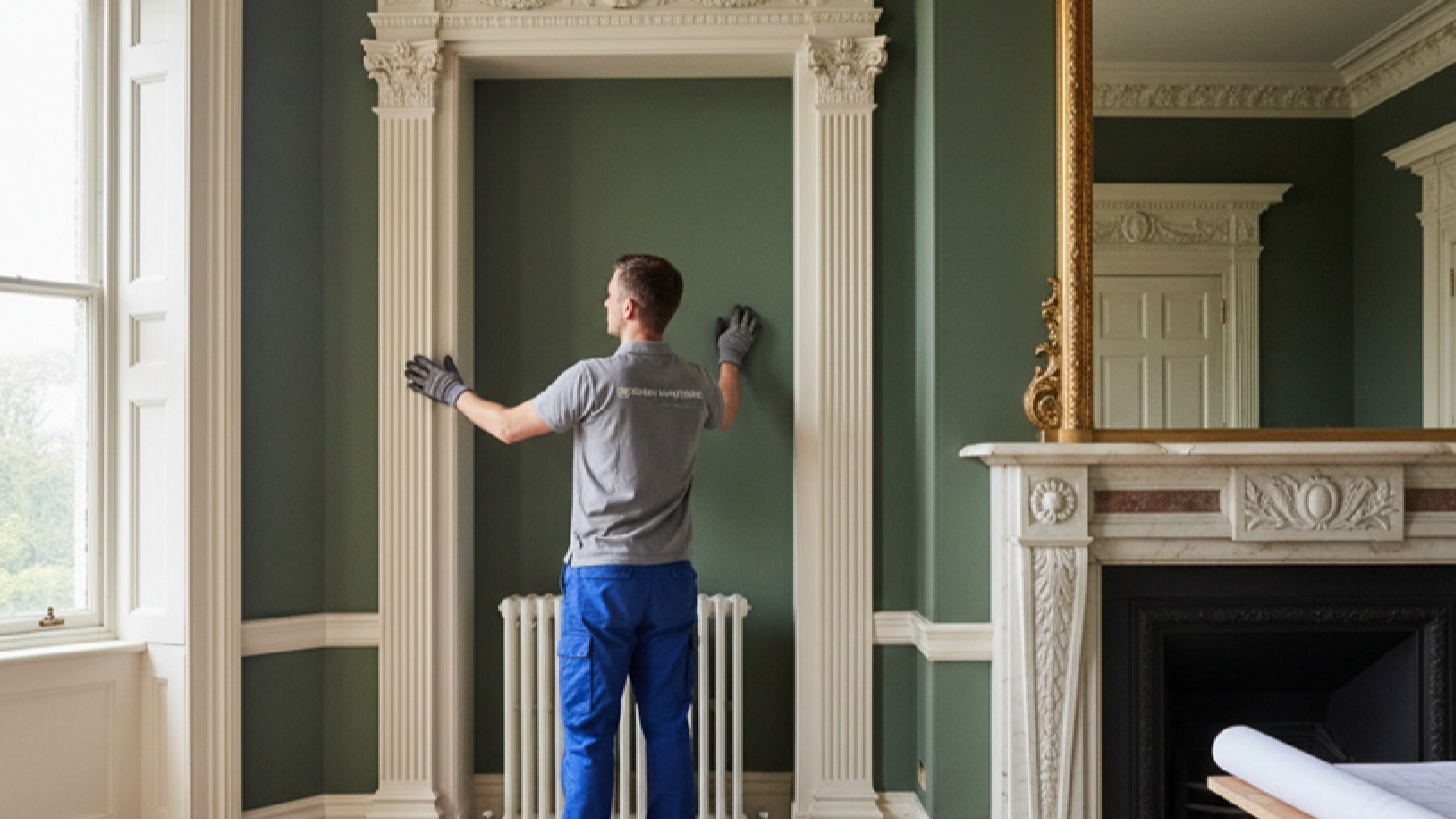
Period homes weren't designed for modern heating systems. The challenge isn't whether to upgrade; cold, inefficient houses deteriorate faster than comfortable ones, but how to install contemporary heating without destroying the architectural details that make these buildings valuable.
We've worked with listed buildings and conservation areas across the UK, where upgrading heating in period homes required approval from conservation officers. The projects that succeeded shared a common approach: they treated the building's historic fabric as a constraint to work within, not an obstacle to overcome.
Why Period Homes Need Different Heating Strategies
Victorian and Edwardian homes were built around solid walls, high ceilings, and coal fires. The thick walls breathed moisture outward. The chimneys created natural ventilation. Radiators arrived later as retrofits, often oversized to compensate for single-glazed windows and minimal insulation.
Modern heating systems assume cavity walls, double glazing, and mechanical ventilation. Install a contemporary system without adapting it to a period building's characteristics, and you'll either fail to heat the space adequately or cause condensation problems that damage historic plasterwork.
The moisture issue matters more than most installers realise. A 2019 Historic England study found that 68% of failed heating upgrades in listed buildings created damp problems within three years. The systems worked, but they just didn't work with the building.
Where Not to Cut Walls and Floors
The worst damage happens when installers treat period homes like new builds. Chasing pipes through original lime plaster destroys decorative cornicing and ceiling roses. Notching floor joists for pipe runs weakens structural timber. Drilling through lath-and-plaster walls cracks the surfaces across entire rooms.
We map pipe routes before touching walls. The building tells you where pipes can run: along joist directions in floors, behind later additions like picture rails, and within existing service voids around chimneys. Original features like ornate plasterwork and decorative tiling mark areas to avoid completely.
Surface-mounted pipework accepts that visible pipes matter less than destroyed plasterwork. Modern microbore pipe (8-10mm diameter) can run along skirting boards and through cupboards without dominating rooms. Quality pipe systems from suppliers like Polypipe and appropriate fittings ensure reliable connections. Box it in with period-appropriate architraves, and it reads as original detailing rather than retrofit work.
For homes with basements or cellars, run primary distribution below ground level. The main heating circuits stay hidden, with only final connections rising through floors. This approach works particularly well in Victorian terraces where cellars run the building's length.
Radiator Placement That Preserves Room Proportions
Period rooms were designed around specific proportions, ceiling heights relate to floor areas, window positions balance wall spaces, and fireplaces anchor room layouts. Radiators need to heat effectively without disrupting these relationships.
The traditional position under windows made sense for single glazing: rising heat countered cold downdraughts. With improved glazing, that location becomes optional. We position radiators where they work thermally whilst respecting architectural features.
Column radiators match period aesthetics better than modern panels. Four-column or six-column designs in cast iron or steel provide high heat output from compact widths. They sit comfortably in alcoves beside chimneys or between windows without overwhelming wall space. Brands like Myson offer traditional-style radiators suitable for period properties.
Sizing matters more in period homes than modern ones. A room with 3.5m ceilings needs 30-40% more heat output than standard calculations suggest, but oversized radiators create visual bulk that dominates rooms. Split the load across two smaller radiators rather than installing one oversized unit.
For rooms where wall space is completely occupied by windows, picture rails, or decorative features, underfloor heating offers an alternative, but only if floor construction allows it without damaging original materials.
Boiler Location in Listed Buildings
Modern condensing boilers need three things period homes don't readily provide: external walls for flues, drainage for condensate, and ventilation. They're also larger than the compact floor-standing boilers that occupied many Victorian sculleries.
Utility spaces added in the 20th century, former pantries, converted coal stores, and side returns, provide ideal locations. They're already outside the main historic fabric, so modifications don't affect protected features. External walls are accessible for flue terminals, and drainage usually exists nearby.
When no utility space exists, loft installations work if the roof structure allows it and conservation officers approve flue terminals. We've installed combination boilers in loft spaces of Grade II listed townhouses where ground floor and basement locations would have required removing original features.
The flue terminal placement often determines whether conservation officers approve an installation. Modern white plastic terminals on street-facing elevations get rejected. Discrete terminals on rear elevations, painted to match surroundings, or concealed within existing chimney stacks, gain approval.
Working With Existing Chimneys
Unused chimneys provide ready-made vertical service routes. The flues can accommodate modern heating pipes, balanced flue systems, or even small-diameter insulated flue pipes for condensing boilers.
Before using a chimney for services, check its condition. Cracked flues that don't matter for ventilation become problems when they allow condensation or combustion gases to penetrate walls. A CCTV survey costs £150-300 and prevents expensive failures.
Flue liners installed within existing chimneys let you run modern heating appliances through Victorian infrastructure. Flexible stainless steel liners (125mm-150mm diameter) fit most domestic flues and meet current Building Regulations for condensing boilers.
The chimney breast itself offers space for pipes and cables. The void between the flue and the external brickwork typically provides 50-100mm of space around the flue's perimeter. Access through small hatches in upstairs rooms lets you route pipes vertically without surface mounting on walls.
Don't assume all chimneys are available. Some contain original cast-iron fireplace back-boilers that have heritage value. Others have structural roles supporting chimney stacks. Get a structural engineer's input before modifying any chimney that serves upper floors.
Control Systems That Don't Require Rewiring
Smart heating controls deliver substantial efficiency gains; 20-30% energy savings are typical, but they usually require mains power at every radiator and multiple wall-mounted controllers. That means extensive rewiring through historic fabric.
Wireless systems avoid this damage. Battery-powered thermostatic radiator valves (TRVs) control individual radiators without wiring. Modern systems from Honeywell, Danfoss, and EPH Controls offer reliable wireless solutions. A central hub connects to the boiler via existing wiring or a wireless connection. Room thermostats mount on surfaces rather than requiring wall chasing.
We specify systems with 2-3 year battery life on TRVs. Yearly battery changes become a maintenance burden that clients abandon. The initial cost premium for long-life wireless systems (typically £200-400 extra) pays back in reduced installation damage and ongoing usability.
For homes where period switches and fittings have heritage value, control systems can integrate with existing wiring without replacing visible components. The smart controls operate behind the scenes whilst maintaining original switch plates and ceiling roses.
Insulation Without Blocking Breathability
Period buildings with solid walls need to breathe. Moisture generated inside moves outward through lime plaster and brick. Block that movement with impermeable insulation, and moisture accumulates within wall structures, causing decay.
Internal wall insulation using breathable materials maintains this moisture movement. Lime-based insulation boards, wood fibre boards, or cork provide thermal improvement (typically R-values of 0.5-1.0 per 25mm thickness) whilst allowing vapour transmission.
The thermal improvement from breathable insulation is modest compared to modern standards; you might achieve U-values of 0.8-1.2 W/m²K versus 0.15 W/m²K for new builds. But that improvement, combined with efficient heating controls and draught-proofing, typically cuts heating costs by 30-40% whilst protecting the building fabric.
Floor insulation delivers better returns in period homes. Suspended timber floors often have 150-300mm voids beneath them. Insulation boards fitted between joists from below (accessed via cellars) or rigid insulation laid over floorboards under new surface layers provide substantial heat retention without affecting walls or ceilings.
Radiator Valve Selection for Period Systems
Period homes often have heating systems installed across multiple decades. A Victorian house might have 1960s pipework, 1980s radiators, and a 2010 boiler. Upgrading these systems piecemeal creates compatibility challenges.
Thermostatic radiator valves (TRVs) should be standard on all radiators except one per zone (typically in the room with the wall thermostat). They prevent overheating and reduce energy waste by 15-20%. But period radiators often have non-standard connection sizes.
British radiators used imperial sizing until the 1970s; ½" BSP connections were standard. European radiators use metric sizing, ½" connections measure 15mm. The difference matters when replacing valves: you need adaptors or compatible valve bodies.
For column radiators with side connections, angled valves sit more discreetly than straight valves. They tuck behind radiator columns rather than projecting into rooms. This matters more in period homes where radiators sit in alcoves or tight spaces where projecting valves create obstruction.
Lockshield valves on radiator returns need adjustment when you upgrade boilers or add TRVs. An unbalanced system short-circuits flow through the nearest radiators whilst starving distant ones. We rebalance every system after component upgrades, which typically takes 2-3 hours but ensures even heat distribution.
When to Consult Conservation Officers
Listed building consent is legally required for any works that affect a building's character in England and Wales. That includes heating historic buildings installations if they involve:
- Removing or altering historic fabric (original plaster, floorboards, panelling)
- Installing visible external elements (flues, vents, external pipework)
- Modifying fireplaces or chimneys
- Affecting the building's setting (ground source heat pump arrays, external tanks)
The consent process takes 8-12 weeks, typically. Applications that show understanding of the building's significance and propose minimal-intervention approaches succeed more often than those treating the building as a blank canvas.
We've found conservation officers receptive to heating upgrades that improve building longevity. A warm, dry building survives better than a cold, damp one. The key is demonstrating that your approach preserves historic fabric whilst achieving thermal performance.
For buildings in conservation areas (not listed themselves but in protected zones), you typically need planning permission only for external alterations visible from public areas. Internal works proceed under Building Regulations alone.
Heat Pumps in Period Properties
Air source heat pumps deliver low-carbon heating but operate differently from gas boilers. They produce lower flow temperatures (45-50°C versus 70-80°C for gas), requiring larger heat emitters and better insulation.
That makes them challenging in period homes with limited insulation potential and restricted space for oversized radiators. But they're not impossible; we've installed them successfully in Georgian and Victorian buildings where conditions suited them.
The prerequisites for heat pump success in period properties include:
- Heat loss below 80W/m² after practical insulation improvements
- Space for larger radiators or underfloor heating on ground floors
- Electrical supply capacity for the heat pump (typically 30-40A)
- External space for the outdoor unit where noise and visual impact are acceptable
Column radiators work well with heat pumps because their high surface area compensates for lower flow temperatures. A six-column radiator provides 50% more heat output than a double-panel convector of the same width at 50°C flow temperature.
Ground source heat pumps avoid the external unit visibility issue but require garden space for horizontal collectors or budget for vertical boreholes (£8,000-15,000 for drilling). They're worth considering for detached period properties with grounds.
Making Upgrades Reversible
Conservation philosophy emphasises reversibility, changes that can be undone without permanent damage. This principle guides successful heating upgrades in historic buildings.
Surface-mounted pipework is reversible; chased pipes in lime plaster aren't. Radiators on original floorboards are reversible; underfloor heating requiring screed isn't. Flue liners within chimneys are reversible; removing chimney breasts isn't.
When we plan installations, we ask: "Could someone in 2074 remove this system and restore the building to its current state?" If the answer is no, we reconsider the approach.
This doesn't mean avoiding all permanent changes. It means ensuring that necessary interventions, like improved insulation or upgraded pipework, happen in locations where they don't destroy irreplaceable historic fabric.
Protecting Heritage Whilst Improving Comfort
Upgrading heating in period homes requires different thinking than modern construction. The goal isn't to make a Victorian house perform like a new build; it's to improve comfort and efficiency whilst preserving the architectural character that makes these buildings valuable.
The successful approach starts with understanding how the building works: how it manages moisture, how its proportions create its character, and where its structure allows intervention. Map your pipe routes around historic features rather than through them. Choose radiators that complement the room proportions. Position boilers where they're accessible but not intrusive.
Work with the building's characteristics rather than against them. Breathable insulation, appropriately sized radiators, and controls that don't require destructive installation deliver substantial improvements without damaging what makes these homes worth preserving., Heating and Plumbing World stocks quality systems from trusted manufacturers. Technical guidance on specific installations is available. Get in touch for professional advice.
The result is a comfortable, efficient home that retains its historic integrity and often gains value from the careful approach to its upgrade.