

Upgrading Standard Radiator Valves to Smart TRVs: Is It Worth It?
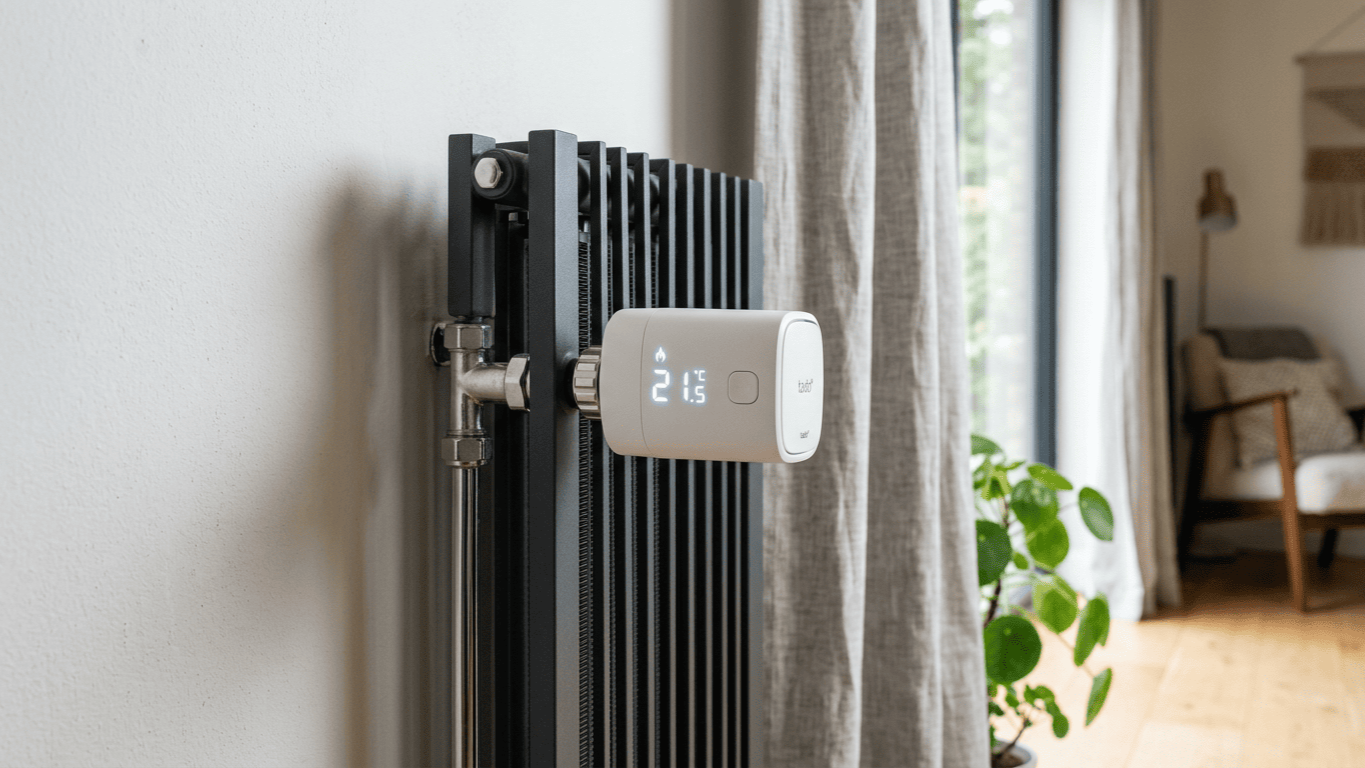
Standard radiator valves do one job: they let you turn the heat up or down manually. Smart thermostatic radiator valves take that basic function and add programmable schedules, remote control via smartphone, and room-by-room temperature management.
The question isn't whether they work, as they certainly do, but whether the investment delivers enough value to justify ripping out perfectly functional mechanical valves. For heating engineers and facilities managers, this decision hinges on three factors: client expectations around energy savings, the complexity of retrofit installation, and whether the building's heating system can actually benefit from zoned control.
A four-bedroom house with a family that's out all day? smart TRVs make sense. A small flat with one occupant who keeps a consistent schedule? Probably overkill.
What Smart TRVs Actually Do Differently
A mechanical TRV uses a wax-filled element that expands and contracts with temperature changes, opening or closing the valve to maintain a set point. It's reliable, requires no power, and has been the standard for decades. smart TRVs replace that mechanical element with an electronic actuator controlled by a microprocessor, battery-powered, and connected via a wireless protocol, usually Zigbee, Z-Wave, or proprietary RF.
Think of a mechanical TRV like a basic cruise control system in an older car. It holds one speed regardless of traffic. A smart valve is like adaptive cruise control, constantly monitoring conditions, anticipating changes, and automatically adjusting your speed for maximum efficiency and comfort.
The practical difference of this proportional control shows up in three areas:
Scheduling and automation: You can programme different temperatures for different times of day. Bedrooms drop to 16°C during the day, and living spaces warm up before anyone gets home. Mechanical valves can't do this, as they maintain whatever temperature you've set until you physically adjust them, often suffering from thermal lag.
Remote control: If plans change, you adjust settings from anywhere via an app. This is useful for clients who travel frequently or have irregular schedules. It's less useful for someone who's home most days and follows a routine.
Integration with other systems: Intelligent valves can work alongside smart thermostats, weather compensation controls, and home automation platforms. Brands like Honeywell and Danfoss offer ecosystem products that communicate with each other, optimising boiler run times and reducing short-cycling. The mechanical valve doesn't care about your schedule or the weather forecast. It just reacts to the room temperature. That simplicity is both its strength and limitation.
The Energy Saving Question: Real Numbers
Manufacturers claim energy savings of 20-30% when upgrading to smart TRVs. That figure assumes you're replacing a system with no zoning at all, relying on just a single room thermostat controlling the entire house. In practice, savings depend heavily on occupancy patterns and existing controls.
Here's what actually drives savings:
Avoiding heating empty rooms: If bedrooms sit empty for eight hours a day but were previously heated to 20°C, automated valves can drop them to a setback temperature. That's a genuine reduction in heat demand. But if those rooms already had mechanical thermostatic radiator valves set low, the smart version adds marginal benefit.
Reducing overshoot: Mechanical TRVs have thermal lag, meaning they keep the valve open slightly too long. The room overshoots the target temperature, then they overcorrect. Intelligent valves with proportional control adjust more precisely, maintaining tighter temperature bands. Over a heating season, that adds up.
Optimising boiler run time: When multiple automated valves close because rooms have reached temperature, the system's heat demand drops. If the boiler modulates properly, and many modern condensing boilers do, it runs more efficiently at part load. If it's an older on/off boiler, you just get shorter run cycles. This is still a saving, but smaller.
A 2019 study by the Energy Saving Trust found average savings of 15% in homes that upgraded from single-zone control to multi-room smart systems. Homes that already had mechanical TRVs and a programmable thermostat saw 6-8% savings. That's the realistic range for most retrofit scenarios.
Installation Complexity: What Changes on Site
Fitting a smart valve isn't dramatically different from fitting a mechanical one, but there are extra steps that add time and potential complications.
Physical installation: Most smart units connect directly to standard M30 x 1.5mm valve bodies without modification. You're replacing the head with an electronic actuator, not the entire valve. It takes about 10 minutes per radiator once you've got the hang of it. Some older valve bodies use non-standard threads and require adapter kits. Always check compatibility before quoting.
Power and batteries: These systems run on AA or AAA batteries, typically lasting 18-24 months. That's a maintenance consideration clients need to understand upfront. Low battery warnings via the app help, but if someone ignores notifications, the valve defaults to a failsafe position (usually fully open). This isn't ideal in a commercial setting where no one's monitoring individual radiators.
Network setup: Every unit needs to join a wireless network. Zigbee and Z-Wave require a central hub or gateway, which then connects to the home Wi-Fi. Proprietary systems use their own hubs. Signal strength matters. Thick walls, distance from the hub, or interference from other devices can cause dropouts. You'll need to test coverage, especially in larger properties or buildings with solid masonry construction.
Pairing and configuration: Each valve must be paired with the system, named, and assigned to a room or zone. Then you set schedules, temperature limits, and any automation rules. This isn't difficult, but it's not instant either. Budget 30-45 minutes for system setup in a typical house after physical installation is complete.
Balancing the system: Automated systems work best when the heating system is properly balanced. If flow rates are uneven, some radiators will reach temperature quickly while others lag, and the smart valves' proportional control can't fully compensate. It's worth checking and adjusting lockshield valves before commissioning the smart system.
When Smart TRVs Make Sense
There are scenarios where the upgrade delivers clear, measurable benefits:
Large properties with variable occupancy: A five-bedroom house where only two bedrooms are used regularly, or a property with guest rooms that sit empty most of the year. Zoning those spaces separately cuts waste without anyone having to remember to adjust radiator valves manually.
Buildings with mixed-use spaces: Homes with a home office, gym, or workshop that's used at different times than living areas. Zoned systems let you heat those spaces on demand without affecting the rest of the house.
Clients who value convenience: Some people will pay for the ability to control heating remotely, even if the energy savings are modest. That's a legitimate reason to upgrade, provided you set expectations realistically about payback periods.
Integration with renewable systems: If the property has solar PV, a smart heating system can shift heat demand to match generation periods, maximising self-consumption. It works particularly well with heat pumps, where automated valves help manage flow temperatures and reduce cycling. They also overcome the thermal lag typical of older components.
Rental properties with inclusive heating costs: Landlords who pay the heating bill have a direct incentive to reduce consumption. Connected valves with usage monitoring can also highlight if tenants are leaving windows open with radiators on full, which is a common issue in HMOs.
When They Don't Make Sense
Equally, there are situations where these upgrades add cost and complexity without proportional benefit:
Small properties with consistent occupancy: A one-bedroom flat occupied by someone with a regular schedule doesn't need per-room control. A single programmable thermostat and mechanical TRVs do the job at a fraction of the cost.
Buildings with poor insulation: If heat loss is high, the system will run constantly regardless of control sophistication. Fix the fabric first with insulation, draught-proofing, and glazing, then consider smart controls. Otherwise, you're just managing waste more precisely.
On a recent residential project in Leeds, a client insisted on fitting an expensive smart system throughout a poorly insulated 1930s semi-detached house. After spending nearly £800 on the upgrade, their energy bills barely changed because the boiler was constantly firing just to combat the severe heat loss through the solid walls. It was a stark reminder that smart controls can't fix fundamental fabric issues.
Older heating systems with poor modulation: An oversized, non-condensing boiler with on/off control won't respond efficiently to reduced heat demand. Automated zoning might save energy by closing off areas, but the boiler will still cycle inefficiently. Better to upgrade the boiler first.
Commercial settings without IT support: Smart systems require firmware updates, occasional troubleshooting, and user training. If there's no one on site who can manage that, you'll end up with support calls and frustrated occupants.
Budget-constrained projects: If the client is weighing up a boiler replacement versus smart controls, the boiler wins every time. A 15-year-old non-condensing boiler wastes more energy than automated valves could ever save.
Compatibility and Ecosystem Lock-In
These systems aren't universal. Most use proprietary protocols, which means you're committing to one manufacturer's ecosystem. Mixing brands rarely works. For example, a Hive TRV won't talk to a Tado thermostat, and third-party integration via platforms like Home Assistant requires technical knowledge most clients don't have.
This matters for future expansion or replacement. If a client starts with one brand's TRVs and later wants to add smart heating controls in an extension, they're stuck with the same system, or they replace everything. That's fine if the manufacturer is established and well-supported, less fine if they're a startup that might not be around in five years.
Open standards like Zigbee and Z-Wave offer more flexibility. Devices from different manufacturers can coexist on the same network, controlled via a central hub. But even then, advanced features, like learning algorithms or weather compensation controls, often require staying within one brand's ecosystem to work properly.
When specifying smart valves with a reliable electronic actuator, check:
- Protocol compatibility: Does it work with the client's existing smart home setup, if any?
- Hub requirements: Does it need a proprietary gateway, or can it use a generic Zigbee/Z-Wave hub?
- App quality: Read recent reviews. A poorly designed app ruins the user experience.
- Manufacturer support: How long has the company been around? Do they push regular firmware updates?
- Replacement part availability: Can you get replacement batteries, adapters, or valve heads easily?
Real-World Example: A Retrofit That Worked
A facilities manager for a small office building with eight rooms asked about upgrading to intelligent zone control. The building had a 30kW condensing boiler, mechanical TRVs on all radiators, and a single programmable thermostat in the main corridor. Heating costs were £3,200 annually, and the building was occupied Monday to Friday, 8am-6pm.
We fitted automated valves in the six perimeter offices and meeting rooms, leaving the corridor and kitchen on mechanical valves as they needed consistent background heat for frost protection and comfort. The system was programmed to heat offices to 20°C from 7:30am-6pm weekdays, dropping to 15°C overnight and weekends. Meeting rooms were set to 18°C by default, with a boost function available via the app when in use.
After 12 months, heating costs dropped to £2,560, representing a 20% reduction. The main savings came from not heating offices to full temperature overnight and at weekends, and from keeping meeting rooms cooler when unoccupied. The boiler's run time decreased by about 15%, and short-cycling reduced noticeably because the system wasn't fighting to maintain 20°C in empty rooms.
Installation took half a day, including setup and testing. Total cost was £1,400 for eight smart TRVs, a hub, and labour. Payback period: just over two years. The client also valued the ability to adjust heating remotely if staff were working late or the building was closed unexpectedly. That's a best-case scenario with a good occupancy pattern for zoning, a well-sized modern boiler, and a client who understood the technology. But it illustrates the point: intelligent heating delivers value when the building's use case suits them.
Maintenance and Long-Term Considerations
Connected radiator systems aren't fit-and-forget. Batteries need replacing, firmware updates should be applied, and occasionally a valve will lose connection to the network and need re-pairing. For domestic clients, this is manageable. They get alerts via the app and can swap batteries themselves. For commercial or rental properties, someone needs to own that responsibility.
Mechanical TRVs, by contrast, can run for 10-15 years without attention, aside from the occasional stuck pin, which is a quick fix. They don't need batteries, updates, or network troubleshooting. That simplicity has value, especially in buildings where access is difficult or maintenance budgets are tight.
There's also the question of obsolescence. A mechanical TRV bought today will still work in 2040. A connected app-based system depends on the manufacturer continuing to support the app, cloud services, and wireless protocol. If the company folds or discontinues the product line, you're left with expensive paperweights.
It's happened before, as several early smart home brands have shut down, leaving customers with non-functional devices. Choose established brands with a track record. Heating and Plumbing World stocks components from manufacturers like Honeywell and Danfoss, both of which have been in the heating controls market for decades and aren't going anywhere.
Conclusion
For the right application, yes, the upgrade is absolutely worth it. Connected systems deliver genuine energy savings and convenience in properties with variable occupancy, multiple zones, or irregular schedules. They work best alongside modern condensing boilers or heat pumps equipped with weather compensation controls that can modulate efficiently in response to reduced demand.
For the wrong application, no. Small properties, tight budgets, or buildings with fundamental heating system issues won't see enough benefit to justify the cost and complexity. Fix the basics first with insulation, boiler efficiency, and system balancing, then consider smart controls. The payback period typically ranges from two to five years, depending on energy prices, usage patterns, and the existing level of control.
If the client values remote control and automation for its own sake, payback is less relevant because they're paying for convenience, and that's fine. As a heating engineer, your job is to assess whether the building and client are a good fit for the technology. Ask about occupancy, existing controls, budget, and expectations. If it makes sense, specify quality components from reputable brands, install them properly, and make sure the client understands how to use and maintain the system. If it doesn't make sense, say so, and explain what would deliver better value.
Automated radiator controls aren't a universal upgrade. They're a tool that works brilliantly in some situations and adds little in others. Know the difference, and you'll save your clients money and yourself headaches.
For technical advice, system design, or product specifications, our team can help. You can also contact our technical team directly to discuss specific project requirements or compatibility questions.