

Variable Speed Pumps vs Fixed Speed: Long-Term Energy Savings
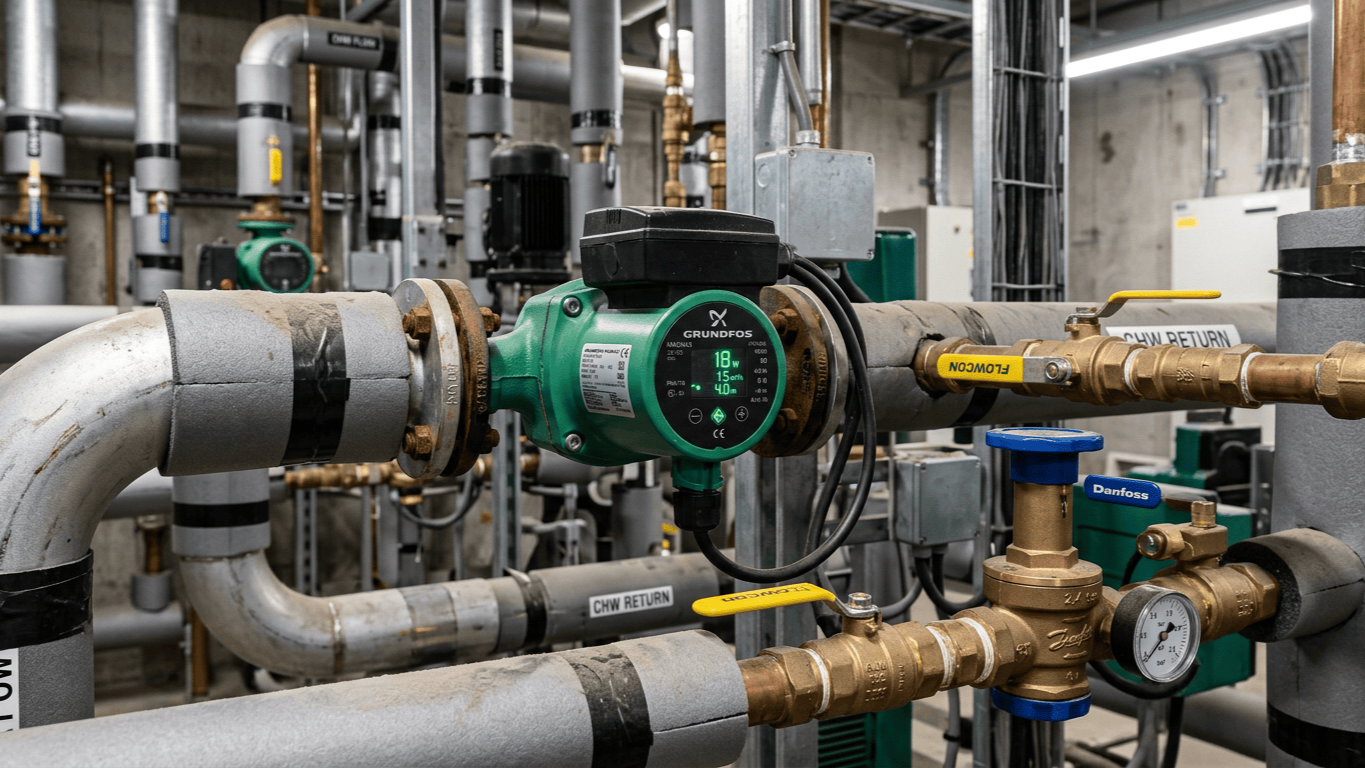
Most heating systems waste energy not because they're working hard, but because they're working unnecessarily. A fixed-speed circulator runs at full capacity regardless of whether you're heating a single radiator or an entire commercial building. It's like driving at 70mph whether you're on a motorway or crawling through a car park; it is inefficient and costly.
Variable speed pumps, by contrast, adjust their output to match actual system demand. This fundamental difference translates into energy savings of 30% to 70% over the pump's operational life. For commercial installations running pumps continuously, these savings compound into tens of thousands of pounds over a 15-year lifespan.
The technology isn't new, but recent advances in motor design have made variable speed pumps the default choice for any system where efficiency matters. Leading manufacturers produce models that now cost only marginally more than fixed-speed alternatives whilst delivering measurably better performance.
How Fixed Speed Pumps Waste Energy
A fixed-speed circulator operates at a constant RPM, delivering the same flow rate and head pressure regardless of system requirements. In a typical heating system, this creates specific inefficiencies that drive up the pump life cycle cost.
First, oversizing for peak load is a common problem. Engineers typically size pumps to handle maximum demand; every radiator open on the coldest day of the year. But systems rarely operate at peak load. A commercial office might need full heating capacity for 200 hours annually, yet the pump runs 8,760 hours per year at the same speed. Heating and Plumbing World provides the necessary hardware to ensure systems are matched to actual building loads.
Second, throttling losses occur when zones close or thermostatic radiator valves shut down flow. Fixed-speed pumps push against increased resistance, converting electrical energy into heat at the pump and wasted flow through bypasses. You're effectively paying to move water in circles. It is often wise to check the expansion vessel installation during a pump upgrade to ensure the system pressure is correctly managed under these varying flow conditions.
Variable Speed Technology Explained
Variable speed hardware uses an electronically commutated motor controlled by integrated variable frequency drives. These systems continuously adjust motor speed to maintain a setpoint. The relationship between pump speed and energy consumption follows the pump affinity laws.
According to the pump affinity laws, halving the pump speed reduces flow to 50%, head pressure to 25%, and power consumption to just 12.5% of full-speed operation. This cubic relationship is where the vast majority of savings accumulate. Modern units feature adaptive algorithms to learn system behaviour over time and identify optimal operating curves.
The motors themselves are inherently more efficient than traditional induction motors. An electronically commutated motor achieves efficiencies of 85% to 90% compared to 60% for standard alternatives. This adds another layer of savings before you even consider speed variation.
Calculating Real-World Energy Savings
Energy savings depend on system load profiles, but the calculations are straightforward. Consider a typical commercial system with a 200W fixed-speed circulator running 6,000 hours annually. Replacing that with a variable speed alternative achieving a conservative 50% reduction saves £150 annually at current rates.
Over a 15-year lifespan, the pump life cycle cost is significantly lower. While the capital cost premium for high-efficiency heating pumps typically ranges from £200 to £400, the payback period is often under three years. For larger 1.5kW units in district heating, payback can occur in under 12 months.
System Design Factors That Maximise Savings
Variable speed pumps don't automatically deliver maximum savings; system design determines actual performance. Low-resistance systems with properly sized pipework allow pumps to reduce speed more aggressively.
A standard differential pressure control strategy responds to system conditions in real-time. When valves close, the pump detects rising pressure and reduces speed. To push these gains further, fitting a smart trv in each room ensures that the flow is restricted precisely at the emitter.
Systems with multiple independently controlled zones create more opportunities for reduction. Weather compensation also plays a role, allowing a heating system control to reduce flow temperature and pump speed simultaneously during milder weather. Proportional differential pressure control can increase savings from 50% to 65% compared to fixed-speed operation.
Maintenance And Reliability Considerations
Variable speed pumps have more complex electronics, but evidence from commercial installations is reassuring. Permanent magnet motors have no brushes to wear out, and the bearings experience less stress because the pump spends most of its life running at reduced speed.
On a recent project, a facilities manager was troubleshooting a system where a fixed-speed water circulation pump had burnt out after just six years. After upgrading to a variable speed unit, they discovered via the on-board diagnostics that the system had a significant hydraulic blockage. The old pump had been deadheading against the blockage for years, wasting thousands in electricity before eventually failing. The new pump's ability to provide performance data saved them from a second expensive failure.
One practical advantage is that these pumps provide diagnostic data. You can monitor operating hours and performance trends, allowing for predictive maintenance. This visibility alone can prevent system downtime that would cost far more than any repair.
Integration With Building Management Systems
These pumps deliver maximum value when integrated into broader building management strategies. Most commercial-grade models communicate via standard protocols, allowing real-time monitoring and coordinated control.
A BMS can optimise pump operation based on multiple inputs, such as outdoor temperature and occupancy schedules. For example, during unoccupied periods, the BMS can reduce the pump's pressure setpoint to minimum levels. This keeps the radiator control systems active for frost protection whilst minimising energy consumption and mechanical wear.
Conclusion
The energy savings from variable speed technology are substantial and well-documented. For most systems, these pumps deliver a 50% to 70% energy reduction compared to fixed-speed operation. The savings compound into thousands of pounds over the equipment's lifetime whilst reducing carbon emissions.
If you're planning a new installation or facing a pump replacement, it's the economically rational choice. The question isn't whether it saves money, but rather how much you're willing to lose by not specifying it.
For technical guidance on pump selection for your specific application, please reach out to our experts at Heating and Plumbing World for advice grounded in real-world experience.