

Viessmann Vitodens 100-W: F4 Ignition Fault Diagnosis And Electrode Replacement
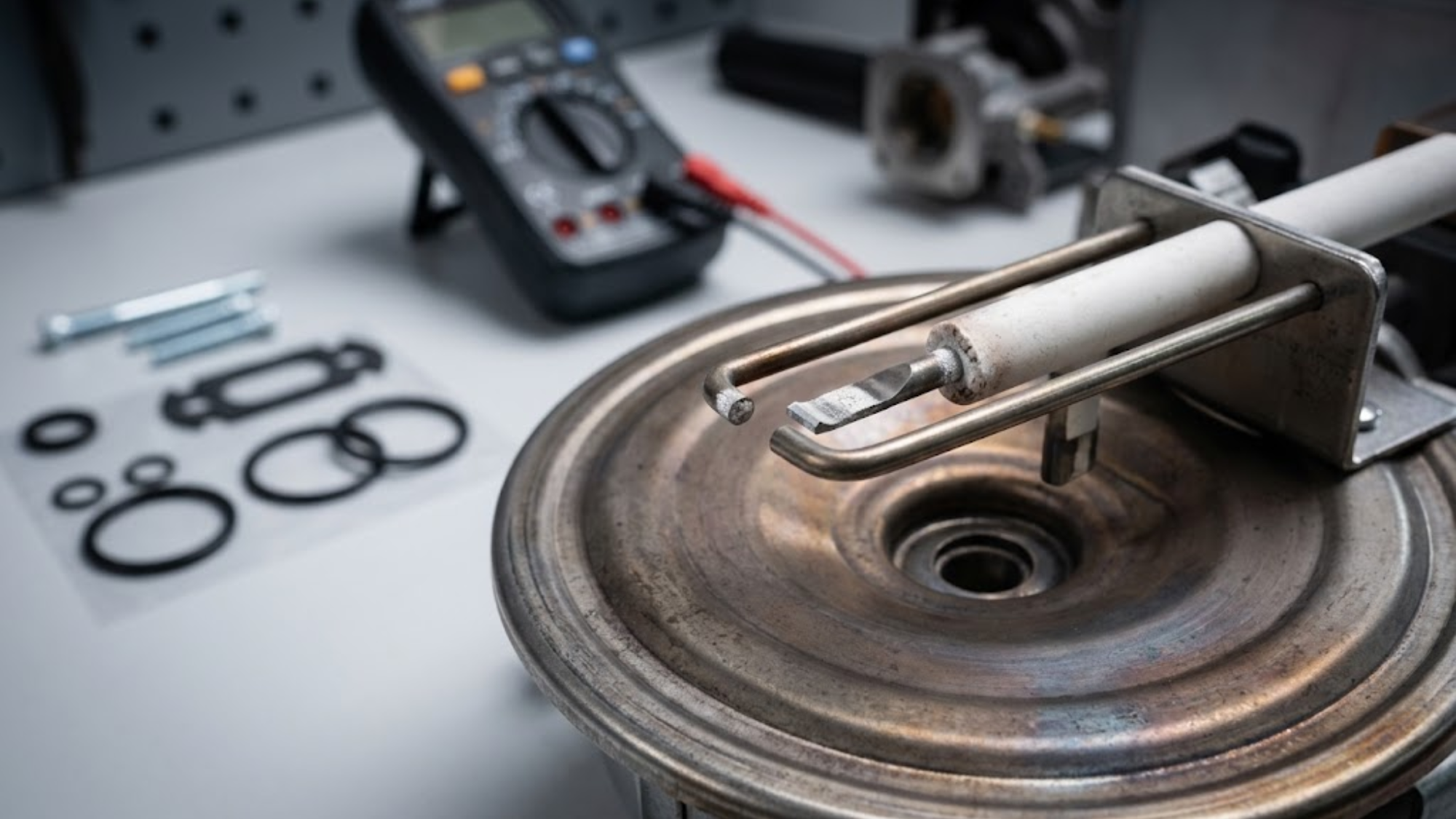
The F4 fault code on a Viessmann Vitodens 100-W indicates a critical failure in the ignition sequence. This error triggers a safety lockout when the boiler fails to detect a flame signal after several attempts. It prevents unburnt gas from accumulating in the heat exchanger by closing the gas valve immediately. You'll need a systematic approach to identify the root cause and restore the heating system.
Most F4 errors stem from worn electrodes or a degraded sensing circuit. This guide explains how to perform a thorough F4 ignition fault diagnosis to pinpoint the exact failure. We'll cover everything from electrical module testing to physical electrode adjustments. Following these steps ensures a safe and reliable repair for your customers.
Understanding The F4 Fault Code
The F4 code appears when the boiler's control board doesn't receive an ionisation current. This detection process occurs within seconds of the burner firing. The unit typically makes three attempts to light before locking out for safety. You may hear the fan ramp up and the spark clicking during these cycles.
Several factors can cause this specific flame signal failure. While worn components are common, issues with the gas supply can also trigger the lockout. You must verify that the meter regulator is working correctly before investigating the boiler internals. This initial check ensures your F4 ignition fault diagnosis remains focused on the actual problem.
Preliminary Diagnostic Steps
Start by verifying the gas supply to the appliance. Ensure the isolation valve is fully open and the meter has not capped off. If the gas pressure at the valve test point is too low, the burner won't ignite. A faulty regulator often causes intermittent lockouts that are difficult to track without a manometer.
You should also inspect the condensate trap for any signs of a blockage. A full trap causes water to back up into the combustion chamber area. This moisture can dampen the ignition leads and prevent a clean spark from jumping. It is a simple check that often avoids the need for expensive boiler spares during the repair.
Testing The Spark Generator Module
The spark generator module provides the high-voltage pulse needed to light the gas. You should hear a rapid clicking sound when the boiler initiates the firing sequence. If the fan runs but there is no sound, the module has likely failed. Check the wiring harness for any loose connections or signs of heat damage.
If the clicking is slow or irregular, the internal capacitor may be failing. Use a multimeter to verify that the control board is sending the correct voltage to the module pins. If the input power is correct but the output is weak, replace the spark generator module. This ensures the burner receives a strong enough spark to bridge the gap.
Inspecting The Ignition Electrode Gap
The distance between the electrode tips is critical for creating a reliable spark. Viessmann specifies an ignition electrode gap of 3mm to 4mm for the Vitodens 100-W. If the gap is too wide, the spark will not bridge the distance. If it is too close, the spark will be too small to ignite the fuel mixture.
Thermal fatigue causes the metal tips to warp or erode over several years of operation. Think of the ignition electrode gap like the spark plug in a car engine. If the gap is wrong or the tip is fouled, the engine won't start reliably. You must adjust or replace the electrodes to ensure a clean ignition during every call for heat.
Maintaining The Flame Sensing Probe
The flame sensing probe tells the boiler that the gas has ignited successfully. This probe uses the flame to conduct a small electrical current back to the control board. If the probe is covered in carbon deposits, it can't detect the ionisation current. This leads to a lockout even if you can see a flame through the sight glass.
Clean the flame sensing probe gently with a soft cloth to restore the signal strength. Do not use heavy abrasives, as you may damage the protective coating on the sensor tip. This component is vital in any combi boiler that has seen heavy use. If the signal remains low after cleaning, you must replace the probe assembly entirely.
Replacing The Burner Gasket Seal
When you remove the burner plate to access the electrodes, you must prioritise system safety. Always install a new burner gasket seal when reassembling the combustion chamber. A worn or compressed burner gasket seal can lead to dangerous flue gas leaks inside the boiler casing. This is a vital step in any F4 ignition fault diagnosis and repair procedure.
On a recent commercial project, I attended a Vitodens that had recurring ignition issues. The previous engineer had cleaned the electrodes but failed to replace the sealing material. The resulting minor gas leak affected the air-to-fuel ratio and caused the flame to lift off the burner. Replacing the gasket and resetting the system resolved the issue permanently.
Verification And System Testing
You must verify the ionisation current after completing any ignition component repairs. Connect your multimeter in series with the sensing lead on the micro-amp (µA) scale. A healthy Vitodens 100-W should produce a reading between 5µA and 15µA while firing. Anything below 3µA indicates a marginal signal that will likely cause another lockout.
Heating and Plumbing World provides these technical baseline figures to help trade professionals ensure a reliable first-time fix. If the reading is stable and consistent across three cycles, the F4 ignition fault diagnosis is complete. You can then reassemble the casing and check the heating system control parameters to ensure efficient operation.
Preventing Future Ignition Faults
Regular servicing is the best way to avoid emergency ignition failures. You should inspect the condition of the electrodes during every annual visit. Carrying a set of boiler replacement parts in your van can save significant time and travel costs. It is often cheaper to replace marginal electrodes during a service than to return for a breakdown.
Ensure your heating controls are set up to prevent excessive short-cycling of the boiler. Frequent starts and stops put more stress on the spark module and the sensing probe. You should also recommend a heating control app to help your customers monitor their system performance remotely. These modern tools help maintain the longevity of sensitive ignition components.
Conclusion
Resolving an F4 fault on a Vitodens 100-W requires methodical testing and attention to detail. By checking the gas supply, electrode gaps, and ionisation currents, you can identify the problem quickly. Always prioritise safety by checking for leaks and using the correct gaskets during reassembly.
Proactive maintenance is the key to preventing these frustrating emergency lockouts. If you encounter a stubborn ignition issue that defies standard testing, you should reach out to our experts for technical support. We are here to help trade professionals keep their customers' heating systems running efficiently.