

Viessmann Vitodens 200-W: Radial Fan Fault Diagnosis And Speed Control Checking
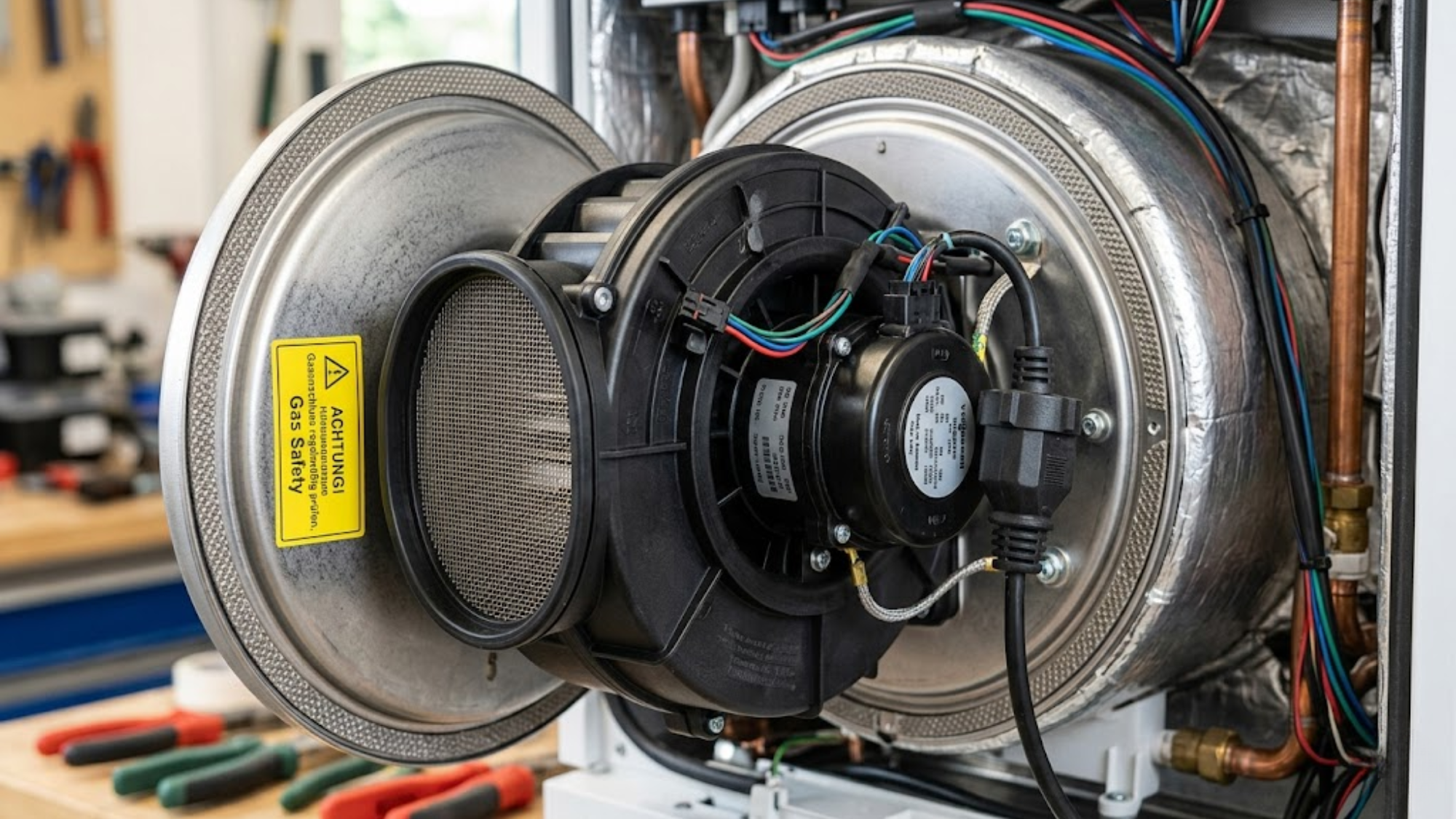
The radial fan in a Viessmann Vitodens 200-W is the heart of its premix combustion system. It manages the precise volume of air required to match the gas delivery. When this component fails, the boiler will display a lockout code such as Eb, F4, or F9. You must follow a systematic radial fan fault diagnosis to determine if the failure is electrical or mechanical.
Modern Vitodens units use sophisticated electronics to manage fan speed across a wide modulation range. If the fan cannot reach its target speed, the boiler will shut down for safety. This guide explains how to test the communication between the board and the fan. Following these steps ensures a reliable repair for your customer.
How The Radial Fan Operates
The fan assembly draws air through the intake and pushes it into the burner assembly. It is a variable-speed motor that adjusts based on the heating demand. The control board monitors this speed constantly to maintain a perfect air-to-gas ratio. This precision is what makes the Vitodens 200-W highly efficient.
A successful radial fan fault diagnosis starts with understanding how the motor receives its instructions. The fan requires a constant mains supply and a separate low-voltage control signal. If either of these paths is interrupted, the burner will fail to ignite. You should always check the main wiring harness before assuming the motor itself has failed.
Symptoms Of Fan Failure
One of the first signs of failure is an increase in acoustic vibration or grinding noises. These sounds often indicate that the internal bearings are wearing out. Over time, high flue gas backpressure can put additional strain on the motor. This usually happens if the flue terminal is restricted or poorly installed.
You may also notice the boiler attempting to start multiple times before locking out. This suggests the fan is spinning but not reaching the required RPM for ignition. If you find any boiler spares in the intake path, clear them immediately. These obstructions force the motor to work harder and shorten its operational lifespan.
On a recent project, I attended a Vitodens that only locked out during high winds. The previous engineer had replaced the control board twice. I found that excessive flue gas backpressure from a poorly positioned terminal was stalling the fan. Correcting the flue resolved the lockout issue permanently.
Think of the fan speed control like a cyclist pedalling a bike. The control board provides the muscle strength while the sensors act as a speedometer. If the speedometer is broken, the cyclist doesn't know how fast to go. If the muscles are tired, the bike won't reach the required speed for the hill.
Testing The Pulse Width Modulation Signal
The control board manages the fan speed using a pulse width modulation signal. This low-voltage square wave tells the fan exactly how fast to rotate. You can measure this signal using a multimeter with a frequency or duty cycle setting. Check the signal at the four-wire connector while the boiler initiates a firing sequence.
A missing pulse width modulation signal indicates a failure in the main control board. If the signal is present but the fan does not move, the internal motor driver is likely faulty. This is common in a combi boiler that has seen many years of heavy use. Always verify the 24V DC supply at the connector before condemning the board.
Checking Motor Tachometer Feedback
The fan reports its actual speed back to the board via the motor tachometer feedback wire. This signal is essential for the boiler to verify that the airflow matches the gas rate. If this signal is corrupted, the boiler will lock out even if the fan is spinning. This safety check prevents dangerous, incomplete combustion.
Use your multimeter to check for a pulsed DC signal on the feedback line. If the fan is spinning but the motor tachometer feedback is zero, the internal sensor has failed. In this scenario, you must replace the fan assembly to restore safe operation. Ensure the heating controls are isolated before you disconnect any sensitive electronic plugs.
Identifying Airflow Restrictions
Sometimes the fan is healthy but cannot move enough air due to a blockage. You should perform a thorough check for any intake screen restriction at the air inlet. Dust, debris, or even insects can clog the mesh over time. This reduces the air volume and causes the flame to become unstable.
A significant intake screen restriction will cause the fan to ramp up to maximum speed to compensate. This leads to increased wear and eventual motor failure. Check that all heating system components in the airflow path are clear. Keeping the intake path clean is a vital part of annual maintenance.
Fan Replacement And Safety Sealing
If your radial fan fault diagnosis confirms a failure, you must replace the unit. Isolate the gas and electrical supplies before you open the combustion chamber. The fan is secured to the burner plate by three mounting bolts. Carefully disconnect the wiring harness and the gas mixing pipe before removal.
Always install a new burner gasket when you reassemble the unit. A faulty seal can lead to dangerous flue gas leaks inside the boiler casing. You should also update the heating control app to verify that the new component is recognized. Ensure the fan is seated flush against the mounting bracket to prevent air leaks.
Post-Repair Performance Verification
Once the new fan is installed, perform a full combustion analysis. Monitor the motor tachometer feedback during the startup sequence to ensure it is stable. The fan should accelerate smoothly without any unusual vibrations. Verify that the pulse width modulation signal matches the demand from the control board.
Check the flue for any signs of flue gas backpressure that could affect the new motor. You must also ensure there is no intake screen restriction remaining in the air path. Heating and Plumbing World recommends recording these final readings for your service records. If the combustion ratios are correct, the repair is complete.
Conclusion
Resolving a fan fault on a Vitodens 200-W requires a methodical electrical approach. By testing the PWM and tachometer signals, you can avoid unnecessary part replacements. Always prioritize safety by checking the seals and performing a flue gas analysis after any repair.
Regular servicing is the best way to catch failing bearings before a total lockout. If you need further diagnostic support, you can contact our support team for technical assistance. We are here to help trade professionals keep Viessmann systems running reliably for their customers.