

Warehouse Heating: Efficient Solutions for Large Spaces
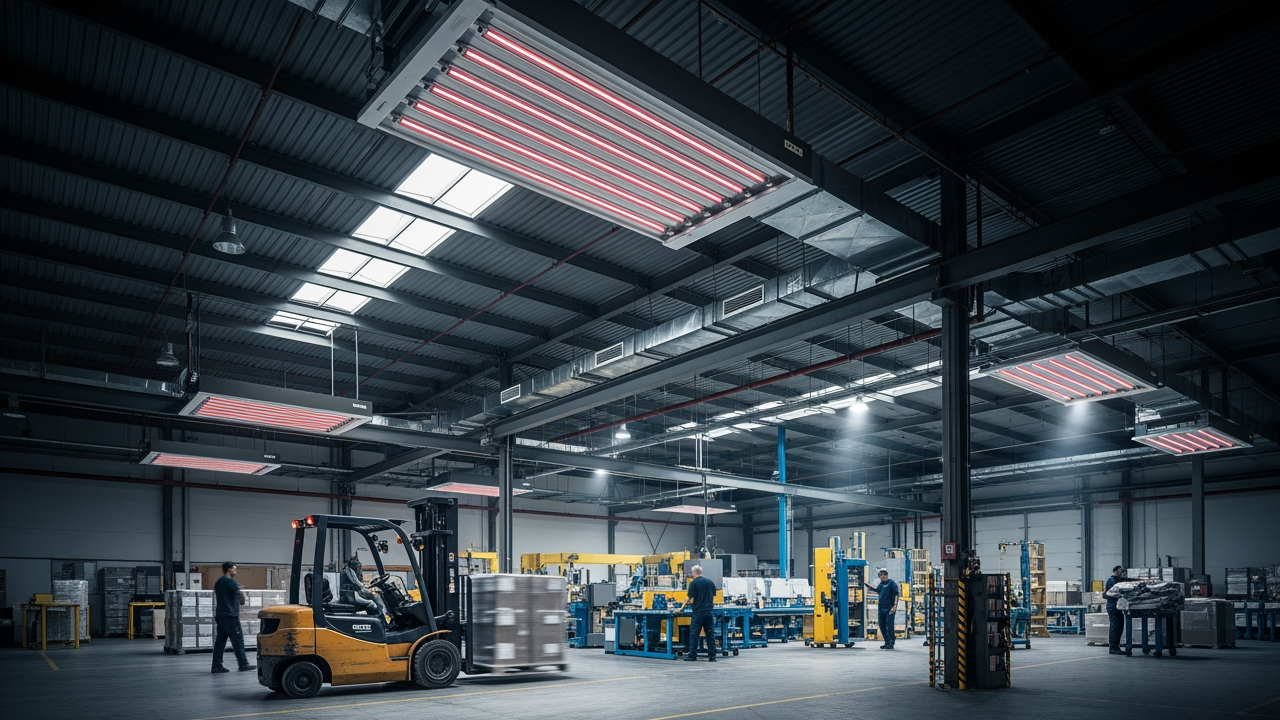
Heating a warehouse presents challenges that most commercial spaces never face. A 50,000 square foot facility with 30-foot ceilings can burn through heating costs faster than expected, whilst workers on the floor still complain about cold spots near loading docks.
Warehouse operations across sectors, from distribution centres to manufacturing facilities, show a consistent pattern: traditional heating approaches waste energy, heating empty vertical space whilst leaving work areas uncomfortably cold. The solution isn't just bigger heaters. It requires matching the right heating technology to how the space actually functions.
Why Standard Heating Systems Fail in Warehouses
Most commercial HVAC systems assume you're heating a space with 8-12-foot ceilings where people occupy most of the floor area. Warehouses break every assumption.
Heat rises. In a warehouse with 25-foot ceilings, your heating system works overtime warming air that collects uselessly at the roof level. Meanwhile, workers at ground level, where temperatures matter, deal with draughts from loading dock doors that open 40 times per shift.
A client running a 75,000 square foot cold storage distribution centre showed energy bills of £18,000 monthly during the winter months. Their forced-air system ran continuously, cycling heated air up to the ceiling where it did nothing productive. Floor-level temperatures varied by 8°C between the office area and the picking zones near the dock doors.
The maths gets worse when you factor in air changes. OSHA requirements mean warehouses need adequate ventilation. Every air change pushes your heated air outside and pulls cold air in. You're essentially heating the outdoors.
Radiant Heating: Warming People, Not Air
Warehouse heating systems based on radiant technology work differently. Instead of heating air that rises away from workers, they emit infrared radiation that warms objects and people directly, the same principle as standing in sunlight on a cold day.
Radiant tube heaters suit most warehouse applications. These systems mount at ceiling height and direct heat downward to the occupied zone. A facility in Manchester cut heating costs by 52% after switching from forced air to radiant tubes, dropping their monthly winter bills from £14,200 to £6,800.
The efficiency comes from physics. Radiant systems maintain comfortable temperatures at floor level (typically 15-18°C) whilst allowing ceiling-level air to stay cooler. You're not paying to heat 20 feet of vertical space nobody uses.
High-intensity radiant heaters work well for spot heating in specific work zones. Mount them over packing stations, quality control areas, or anywhere workers stay stationary for extended periods. These units deliver focused warmth where you need it, rather than attempting to heat the entire volume of the building.
Low-intensity radiant tubes suit larger areas where you need more even heat distribution. These systems use gas-fired burners to heat tubes that run the length of your facility. The tubes radiate heat downward across a broader area. Installations range from 30,000 to 200,000 square feet.
One advantage that surprises facility managers: radiant systems recover quickly after dock doors open. Since you're heating objects rather than air, you don't lose all your heat every time a door opens for a delivery. The floor, racking, and inventory stay warm and re-radiate heat back into the space.
Destratification Fans: Making Forced Air Work Better
If you're committed to keeping a forced-air system, destratification fans recover wasted heat trapped at ceiling level. These large-diameter, low-speed fans (typically 8-24 feet across) push warm air back down to the occupied zone.
The energy maths works: a destratification fan might draw 1-2 kW whilst recovering heat that would otherwise require 50+ kW to replace. A 60,000 square foot automotive parts warehouse in Birmingham added six destratification fans for £18,000. Their heating costs dropped 31% the first winter, a 14-month payback period.
Install fans strategically. Position them to push air downward in a column, not to create horizontal airflow that causes draughts. Space them according to ceiling height, higher ceilings need fans with larger diameters and more power to move air effectively through the greater vertical distance.
Run fans continuously during heating season, not just when heaters operate. The constant gentle circulation prevents stratification from developing in the first place. Most modern units draw minimal power (0.5-2 kW) and operate quietly enough that workers don't notice them.
Unit Heaters: Targeted Warmth for Specific Zones
Unit heaters serve warehouses that need heating in specific areas rather than throughout the entire space. These self-contained units mount to walls or ceilings and blow heated air into a defined zone.
Gas-fired unit heaters deliver high output (75,000-400,000 BTU) for larger areas. These install in shipping/receiving zones, manufacturing cells, or maintenance bays where workers need consistent warmth. A unit heater mounted 12-15 feet high can effectively heat a 2,500-3,500 square foot zone.
Electric unit heaters make sense for smaller areas or locations where gas lines aren't practical. Whilst operating costs run higher than gas, the installation costs stay lower. Use these for offices within the warehouse, break rooms, or quality control labs that need tighter temperature control than the main warehouse floor.
A common mistake: facility managers install unit heaters but position them poorly. Mount units to blow air across the work area, not directly at workers. Direct blast from a high-output heater creates discomfort rather than solving it. Angle the airflow to create circulation without draughts.
Infrared Heaters: Precision Heating for Work Stations
Infrared heaters focus intense heat on specific locations, individual work stations, loading dock areas, or entrance zones that constantly lose heat.
A food distribution centre installed infrared heaters over its dock levellers. Workers who previously refused assignments in the receiving area now work comfortably even when bay doors stay open during multi-pallet deliveries. The heaters maintain 16°C at the worker level whilst the door stands open to -2°C outside air.
These systems excel at solving cold spots that other heating methods can't address economically. Rather than heating an entire 1,000 square metre zone to keep three packing stations comfortable, install infrared heaters directly over those stations. You'll use 60-70% less energy than heating the whole area.
Electric infrared heaters install quickly and need minimal maintenance. Mount them 10-12 feet above the work area for optimal coverage. Most units draw 1,500-6,000 watts and heat a 50-150 square foot zone effectively.
Gas infrared heaters deliver higher output for larger areas or higher mounting heights. These work well in facilities with existing gas infrastructure and high heating demands.
Insulation and Air Sealing: The Unglamorous Foundation
The best heating system can't overcome poor building envelope performance. Warehouses that spend £25,000 on new heaters whilst ignoring the 400 square feet of gaps around their dock doors miss the point entirely.
Start with the obvious losses:
Dock doors and seals: Inspect door seals quarterly. A worn seal on a door that cycles 30 times daily leaks as much heat as leaving a 3-foot by 3-foot window open continuously. Replace seals that show compression set or tearing. Budget £150-400 per door, the payback runs 4-8 months in most climates.
Roof insulation: Many older warehouses have minimal or degraded roof insulation. Adding insulation to achieve R-30 values costs £15-25 per square metre but cuts heat loss through the roof by 40-60%. In a 10,000 square metre facility, that's £40,000-60,000 in annual savings.
Personnel doors: Every personnel door that stays open while workers move equipment wastes heat. Install strip curtains (£200-600) or high-speed roll-up doors (£3,000-8,000) to maintain a thermal barrier whilst allowing access.
A pharmaceutical distribution facility in Leeds spent £85,000 on building envelope improvements, new dock seals, strip curtains, and roof insulation. Their heating costs dropped from £38,000 to £21,000 annually. The project paid for itself in under five years, and the savings continue every year after.
Temperature Zoning: Heat Where You Need It
Different warehouse areas need different temperatures. Warehouse heating solutions that zone temperatures based on activity levels deliver substantial savings.
Active work areas (packing, assembly, quality control): Maintain 16-18°C for worker comfort and productivity. These areas justify higher heating costs because people spend their entire shifts there.
Transit zones (aisles, picking areas): Hold at 12-15°C. Workers move through these areas but don't stay stationary long enough to need full comfort heating.
Storage areas (racking, bulk storage): Hold at 8-10°C unless product requires specific temperatures. The empty space between racks doesn't need the same comfort level as work areas.
A 45,000 square foot electronics distribution centre implemented three-zone heating: 18°C in the packing area (4,000 sq ft), 14°C in picking aisles (18,000 sq ft), and 10°C in bulk storage (23,000 sq ft). Their heating costs dropped 38% compared to maintaining 16°C throughout.
Control systems from Honeywell, Danfoss, or EPH Controls make zoning practical. Modern thermostats and zone controllers cost £200-800 per zone but deliver precise temperature management. The investment pays back within one heating season for most multi-zone installations.
Maintenance: Protecting Your Investment
Heating equipment works hard in warehouse environments. Dust, debris, and continuous operation during winter months stress components that need regular attention.
Radiant tube systems: Inspect burners and tubes annually before heating season. Clean reflectors, dust accumulation cuts efficiency by 15-20%. Check for tube corrosion or damage. A maintenance contract typically runs £800-1,500 annually for a mid-sized facility and prevents expensive mid-winter failures.
Unit heaters: Replace filters monthly during heating season. A clogged filter cuts airflow by 30-40%, forcing the unit to work harder whilst delivering less heat. Inspect gas connections and electrical contacts annually. Budget 2-3 hours of maintenance time per unit each year.
Destratification fans: Check blade balance and mounting hardware quarterly. An unbalanced fan creates noise and vibration that leads to premature bearing failure. Lubricate bearings according to manufacturer specifications, typically every 2,000-4,000 operating hours.
Facilities that stick to scheduled maintenance spend 60% less on emergency repairs than facilities that run equipment until failure. A £1,200 annual maintenance contract prevents £4,000-8,000 in emergency service calls and lost productivity.
Calculating Your Actual Heating Needs
Warehouse heating calculations need to account for factors that don't apply to standard commercial spaces. Online calculators and rules of thumb often miss critical variables that double your actual requirements.
Heat loss through the building envelope: Calculate this based on your specific insulation values, not generic assumptions. A warehouse with R-10 roof insulation loses heat twice as fast as one with R-20 insulation.
Air infiltration: Loading docks, personnel doors, and building leakage bring in outside air that needs heating. A facility with four dock doors that each open 20 times per shift needs 40-60% more heating capacity than the same building with sealed doors.
Ceiling height: Heat loss increases with ceiling height because you're maintaining temperature across a larger volume of air. A 30-foot ceiling requires 35-50% more heating capacity than a 15-foot ceiling in the same floor area.
Temperature differential: The gap between your target indoor temperature and average outdoor winter temperature determines how hard your system works. A facility in Newcastle targeting 16°C indoor temperature with average winter lows of 2°C needs different capacity than the same building in Plymouth where winter lows average 5°C.
Detailed heat loss calculations prove essential for every warehouse project. A recent 35,000 square foot facility in Manchester needed 850,000 BTU/hour based on actual building characteristics, 40% more than the generic calculator suggested. Under-sizing the system would have left workers cold and created constant complaints.
Combining Technologies for Optimal Results
The most efficient warehouse heating systems use multiple technologies, each addressing specific needs.
A 120,000 square foot distribution centre design included:
- Low-intensity radiant tubes for general warehouse heating (75% of floor area)
- High-intensity infrared heaters over dock doors and receiving areas (8 locations)
- Unit heaters in the maintenance shop and returns processing area (4 units)
- Destratification fans throughout the main warehouse (12 fans)
Total installation cost: £185,000. Annual heating costs: £42,000. The previous forced-air system cost £89,000 annually to operate. The new system paid for itself in 2.1 years and continues saving £47,000 every year.
The key is matching technology to specific conditions rather than applying one solution everywhere. Radiant tubes work brilliantly for open warehouse areas but can't solve the cold blast when dock doors open. Infrared heaters handle that problem. Destratification fans recover heat that would otherwise collect uselessly at the ceiling.
Making the Investment Decision
Warehouse heating upgrades require significant capital, but the economics work when you calculate properly.
Start with your current costs. Pull 24 months of heating bills to establish your baseline. Factor in productivity losses from cold conditions, workers in uncomfortable conditions move more slowly and take more breaks.
Calculate upgrade costs, including installation. Get quotes from contractors experienced with warehouse heating, not residential HVAC companies trying to scale up their standard approach.
Project annual savings conservatively. Typical estimates show 30-40% savings from radiant system conversions, 25-35% from adding destratification fans, and 15-25% from building envelope improvements. Results often exceed projections, but conservative estimates help justify the investment.
Factor in maintenance costs for current versus proposed systems. Radiant systems typically cost less to maintain than forced-air systems because they have fewer moving parts and don't require filter changes.
Most warehouse heating upgrades pay for themselves in 2-5 years. After payback, the savings continue for the 15-25 year lifespan of the equipment.
Conclusion
Warehouse heating demands a different approach than standard commercial spaces. The combination of high ceilings, large volumes, frequent door openings, and varying occupancy patterns makes traditional forced-air systems inefficient and expensive.
Radiant heating systems deliver the most consistent results for most warehouses, cutting energy costs by 40-50% whilst improving comfort in work areas. Destratification fans salvage existing forced-air systems by recovering wasted heat from the ceiling level. Strategic use of unit heaters and infrared heaters solves specific problem areas without heating entire zones unnecessarily.
The foundation remains building envelope performance. Seal gaps, upgrade insulation, and maintain door seals before investing in heating equipment. The best heating system can't overcome poor envelope performance.
Calculate your needs based on actual building characteristics, not generic formulae. Account for ceiling height, air infiltration, and local climate conditions. Under-sizing equipment saves money upfront, but costs far more in ongoing energy waste and worker discomfort.
Most importantly, design your heating system around how you actually use the space. Zone temperatures based on activity levels, focus heat where people work, and let storage areas run cooler. This targeted approach cuts costs whilst maintaining comfort where it matters, at work stations where your team spends their days.
For expert advice on selecting the right warehouse heating solutions, you can get in touch with us for your facility, Heating and Plumbing World offers a comprehensive range of commercial heating equipment and technical support.