

Water Filtration for Drinking Water: Whole House Systems
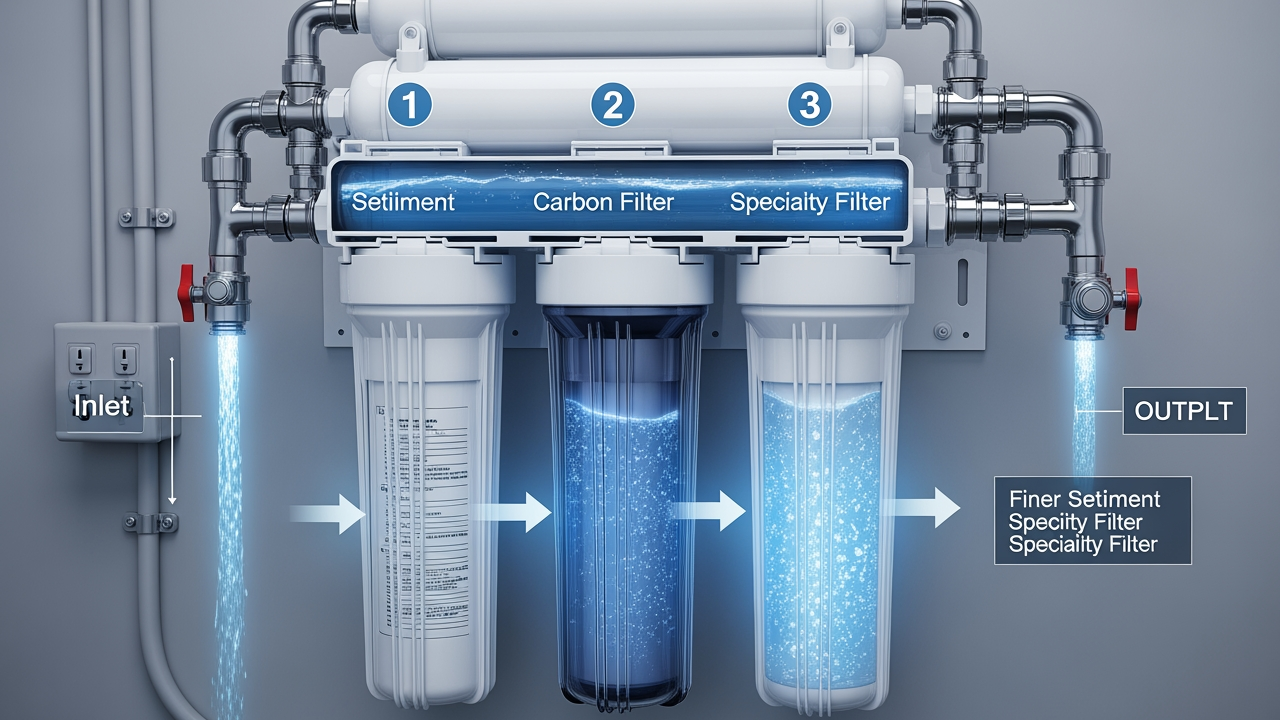
Most homeowners discover they need water filtration after spotting scale buildup on fixtures, tasting chlorine, or dealing with stained laundry. By that point, untreated water has already damaged appliances and affected daily comfort. A whole-house water filtration system addresses these issues at the source, treating every drop before it reaches your taps, showers, and appliances.
What Whole House Water Filtration Actually Does
A whole-house water filter system is installed at your main water line, filtering all incoming water before distribution throughout your home. Unlike point-of-use filters under kitchen sinks, these systems protect every water outlet simultaneously.
The typical setup includes three components: a sediment pre-filter that catches particles larger than 5 microns, a main filtration stage targeting specific contaminants, and a post-filter for final polishing. Water pressure drops slightly, usually 5-10 PSI, but remains sufficient for normal household use.
These systems handle 10-20 gallons per minute, enough for simultaneous showers, dishwashing, and laundry. Installation requires 2-3 hours for a qualified plumber, with the unit mounted on the wall near your water metre or pressure tank.
The Three Main Filtration Technologies
Carbon Filtration
Carbon filtration removes chlorine, volatile organic compounds (VOCs), and chemicals that affect taste and odour. Activated carbon filters contain millions of microscopic pores that trap contaminants through adsorption. These filters need replacement every 6-12 months, depending on water usage and quality.
A family of four using 300 gallons daily typically needs replacement at the 9-month mark. Carbon filters excel at improving water taste and protecting appliances from chlorine damage, but they don't remove minerals, causing hardness.
Reverse Osmosis Systems
Reverse osmosis (RO) systems force water through a semipermeable membrane with pores measuring 0.0001 microns. This removes up to 99% of dissolved solids, including lead, arsenic, fluoride, and nitrates. Whole-house RO systems require significant water pressure (40-80 PSI) and produce wastewater, typically 3-4 gallons of waste per gallon of filtered water.
The upfront cost runs £3,500-£8,000 installed, making RO practical mainly for severe contamination issues or when municipal water contains concerning levels of specific contaminants. Most residential applications don't require this level of filtration.
Water Softeners with Filtration
Water softeners with filtration combine ion exchange to remove hardness minerals (calcium and magnesium) with carbon filtration for chemical removal. The resin tank exchanges sodium or potassium ions for hardness minerals, whilst the carbon stage handles chlorine and organic compounds.
These dual-purpose systems cost £1,200-£2,500 installed and address the two most common water quality complaints simultaneously. Regeneration occurs every 3-7 days, using salt and approximately 50 gallons of water per cycle.
Hard Water vs Contamination: What You're Actually Solving
Hard water and contamination require different solutions. Testing determines which system you need.
Hard water contains dissolved calcium and magnesium, minerals that aren't health hazards but create scale buildup. Water above 120 mg/L (7 grains per gallon) qualifies as hard. Scale accumulates in water heaters, reducing efficiency by 20-30% annually. It leaves spots on glassware, creates soap scum, and shortens appliance lifespan.
A water softener solves hardness. Adding a carbon filter improves taste and removes chlorine, but the softener does the heavy lifting against scale.
Contamination involves substances that affect health or safety: lead from old pipes, agricultural runoff containing nitrates, or industrial chemicals. Well water often contains bacteria, iron, or manganese, requiring specific treatment.
Free water testing from your municipality shows what's in your supply. Private labs charge £100-£200 for comprehensive testing covering 50+ contaminants. This data determines which filtration technology you need.
Installation Requirements and Space Considerations
Whole-house water filtration systems need 24-36 inches of wall space and 18 inches of clearance for filter changes. The main unit mounts at eye level for easy maintenance, with bypass valves allowing water flow during filter replacement.
Your plumber will install a drain line for backwashing systems and ensure adequate water pressure post-installation. Homes with pressure below 40 PSI may need a booster pump, adding £400-£800 to installation costs.
Well water systems require a pressure tank and may need additional pre-filtration for sediment or iron. The sequence matters: sediment filter first, then iron removal if needed, followed by softening, and finally carbon filtration.
Municipal water connections are simpler, typically requiring only the main filtration unit and standard plumbing connections. Building codes in most areas permit DIY installation, but professional installation ensures proper bypass configuration and prevents warranty issues.
Operating Costs Beyond the Initial Purchase
A carbon filter system costs £8-£15 monthly to operate. Filter cartridges run £40-£80 and last 6-12 months. A family of four spending £120 annually on replacement filters often saves more than that by extending appliance life and reducing cleaning product use.
Water softeners add salt costs of £10-£20 monthly, depending on hardness levels and household size. A 40-pound bag of salt costs £6-£8 and lasts 3-4 weeks for typical families. Water usage increases by 50-100 gallons monthly for regeneration cycles.
RO systems have the highest operating costs: £200-£400 annually for membrane and filter replacements, plus increased water bills from wastewater production. A household using 300 gallons daily generates an additional 100-150 gallons of wastewater with whole-house RO.
Energy costs remain minimal; most systems use no electricity except for UV purification add-ons, which draw 30-40 watts continuously, adding roughly £3-£5 monthly to electric bills.
Performance Metrics That Actually Matter
Contaminant reduction rates show what percentage of specific substances the system removes. Look for NSF/ANSI certification on these claims. Standard 42 covers aesthetic effects (taste, odour, chlorine), whilst Standard 53 addresses health-related contaminants like lead and cysts.
A system certified for 97% chlorine removal at 10 gallons per minute maintains that performance at rated flow. Exceeding the flow rate reduces effectiveness; running 15 gallons per minute through a 10 GPM system might drop removal to 85%.
Filter capacity measures gallons treated before replacement. A 100,000-gallon carbon filter serves a family of four for 10-12 months at 300 gallons daily usage. Actual lifespan varies with water quality; high chlorine levels exhaust carbon faster.
Flow rate requirements depend on household size and simultaneous water use. Two bathrooms plus a kitchen need 10-12 GPM minimum. Three bathrooms require 15 GPM. Under-sized systems create pressure drops during peak use, causing weak showers when multiple fixtures run simultaneously.
Common Installation Mistakes to Avoid
Installing filters backwards happens more often than you'd expect. Housings mark flow direction with arrows, reversing flow damages filter media and voids warranties. The sediment filter always comes first in the sequence, protecting downstream filters from particles that would clog finer media.
Skipping bypass valves creates problems during maintenance. A proper bypass lets you isolate the filtration system whilst maintaining water flow to the house. Without it, you shut off all water during filter changes.
Incorrect drain line installation causes flooding during backwash cycles. The drain line needs an air gap; the pipe can't connect directly to sewer lines. It should terminate 2 inches above a floor drain or utility sink.
Overtightening filter housings cracks the plastic. Hand-tight plus a quarter turn is sufficient. Dozens of cracked housings have resulted from homeowners using wrenches to crank down filters "just to be safe."
Maintenance Schedule for Long-Term Performance
Every 3 months: Check for leaks around housings and connections. Inspect pressure gauges; a 10+ PSI drop from baseline indicates clogged filters needing replacement. Verify drain lines remain clear.
Every 6-12 months: Replace sediment pre-filters and carbon filters based on usage and water quality. Mark the installation date on the filters with a permanent marker. High-sediment water requires quarterly changes; clean municipal water extends life to 12 months.
Annually: Sanitise the system by running a bleach solution through empty housings (1/4 cup bleach per gallon of water). Inspect O-rings and replace any showing cracks or deformation. Test water quality to verify the system maintains performance standards.
Every 2-3 years: Replace RO membranes if applicable. Test salt levels in softener brine tanks monthly, refilling when salt drops below half-full. Clean the brine tank annually to prevent salt bridging.
Neglected maintenance reduces effectiveness gradually. A carbon filter 6 months past replacement still flows water, but removes only 40-50% of contaminants instead of 95%+. You won't notice the decline without testing.
When Point-of-Use Filters Make More Sense
Not every home needs whole-house water filtration. Municipal water meeting EPA standards and causing no hardness issues works fine for most households. Adding a simple under-sink filter for drinking water costs £150-£300 and handles taste concerns.
Renters benefit from point-of-use systems that they can take when moving. A countertop or faucet-mount filter provides clean drinking water without permanent installation.
Homes with good water quality but specific concerns, like lead from old pipes, solve the problem with a kitchen filter rather than treating all water. You don't need filtered water for toilets and outdoor faucets.
Budget constraints make point-of-use systems attractive. A quality under-sink RO system costs £200-£400 versus £3,500+ for whole-house RO. Most families drink and cook with less than 5% of household water, making targeted filtration economical.
Sizing the System to Your Actual Needs
Calculate peak flow by adding simultaneous fixture use: shower (2.5 GPM) + washing machine (3 GPM) + kitchen sink (2 GPM) + toilet (3 GPM) = 10.5 GPM minimum system capacity. Add a 20% margin for pressure maintenance, requiring a 12-13 GPM system.
Undersizing creates pressure drops during peak use. Oversizing wastes money; a 20 GPM system costs £800-£1,200 more than a 12 GPM unit, with no benefit for a typical household.
Tank size for softeners depends on the hardness level and daily usage. Water at 15-grain hardness requires larger resin capacity than 5-grain water. A family using 300 gallons daily with 10-grain hardness needs a 32,000-grain softener minimum. The calculation: 300 gallons × 10 grains = 3,000 grains daily, with systems regenerating every 7-10 days.
The Real Cost of Doing Nothing
Untreated hard water costs £300-£500 annually in extra expenses. Water heaters lose 20-30% efficiency within 3-5 years due to scale buildup. An £800 water heater replacement comes 5 years early, and higher energy bills add £10-£15 monthly.
Appliances fail faster; dishwashers, washing machines, and ice makers contain small passages that clog with scale. The average dishwasher lasts 9-12 years with soft water versus 6-8 years with hard water.
Cleaning products work less effectively in hard water, requiring 50-75% more detergent for equivalent results. A family spending £40 monthly on cleaning supplies wastes £15-£20 due to the hardness.
Contaminated water poses health risks that are harder to quantify. Lead exposure affects child development at levels as low as five parts per billion. Nitrates in well water cause methemoglobinemia in infants. These risks justify filtration costs regardless of financial calculations.
Whole-house water filtration solves problems at their source rather than treating symptoms. Hard water, causing scale build-up, needs softening, whilst chemical taste requires carbon filtration. Testing reveals what's actually in your water, guiding the right system choice.
A properly sized whole-house water filter, matching your household's peak flow requirements, maintains pressure whilst removing contaminants. Installation takes a few hours but requires correct sequencing: sediment filter first, then specialised treatment, followed by final polishing.
The £1,200-£2,500 investment for most residential systems pays back through extended appliance life, reduced cleaning costs, and improved water quality throughout your home. Monthly operating costs of £15-£30 for filters and salt remain manageable for most budgets.
Start with water testing to identify your specific issues. Municipal water reports show what's in your supply, whilst private well testing costs £100-£200 for a comprehensive analysis. Match the filtration technology to your actual contaminants rather than over-treating clean water or under-treating serious issues.
Systems last 10-15 years with proper maintenance, quarterly inspections, annual filter changes, and periodic sanitisation. The difference between filtered and unfiltered water shows immediately in better taste, cleaner fixtures, and softer laundry. The long-term benefits appear in appliances that reach their full lifespan and plumbing that stays clear of scale deposits.
Heating and Plumbing World supplies water treatment solutions and plumbing components from leading manufacturers, including Gledhill cylinders, Kingspan hot water systems, Grundfos pumps, and Polypipe piping systems. For expert guidance on selecting the right water filtration system for your property, get in touch with the technical team.