

Water Softeners: Do They Really Extend Boiler Life?
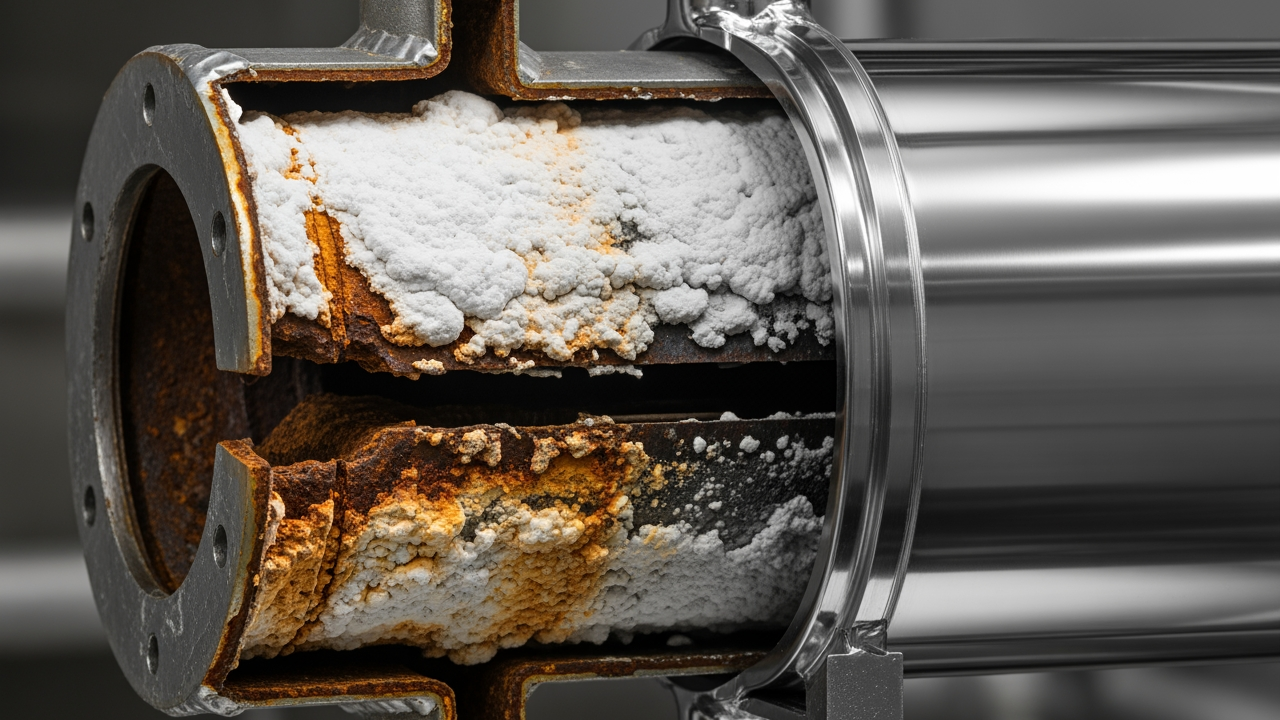
Hard water destroys boilers from the inside out. Every time your heating system cycles on, minerals in unfiltered water crystallise on heat exchanger surfaces, forming limescale that chokes efficiency and accelerates failure. A 3mm layer of scale forces your boiler to work 25% harder to heat the same amount of water.
The question isn't whether water softeners help; it's whether the investment pays off compared to repair costs and energy waste.
What Hard Water Actually Does to Your Boiler
Hard water contains dissolved calcium and magnesium. When heated above 60°C, these minerals precipitate out as limescale, a rock-hard deposit that accumulates on any surface the water touches.
Inside a boiler, this means:
Heat exchanger surfaces develop thick scale layers that insulate metal from water, forcing the system to burn more fuel for the same heat output.
Pipework narrows as scale builds up, reducing flow rates and creating pressure problems.
Pumps from Grundfos or Lowara work harder against increased resistance, wearing out motors faster.
Sensors fail when scale coats probes, causing incorrect temperature readings and system shutdowns.
Scale buildup measurements in boilers operating in very hard water areas (300+ mg/L calcium carbonate) show concerning results. After just three years without softening, some heat exchangers showed 5-6mm of scale, enough to cut efficiency by 40% and trigger premature failure.
The hardest hit? Combination boilers from Andrews and other manufacturers. Because they heat domestic hot water on demand, they cycle more frequently and operate at higher temperatures than heating-only systems. This accelerates scale formation dramatically.
The Numbers Behind Scale-Related Failures
The Building Services Research and Information Association tracked boiler performance across different water hardness zones. Their data shows:
- Boilers in very hard water areas (300+ mg/L) fail 2.3 times more frequently than those in soft water areas (0-100 mg/L)
- Average lifespan drops from 15 years in soft water to 8-10 years in very hard water without treatment
- Energy efficiency degrades 6-8% per year in hard water systems versus 1-2% in softened systems
Scale doesn't just reduce efficiency; it creates hot spots. When scale insulates sections of a heat exchanger, those areas overheat. Metal expands unevenly, welds crack, and leaks develop. This is why many "sudden" boiler failures in hard water areas actually result from months of hidden scale accumulation.
How Water Softeners Prevent Scale Formation
Water softeners use ion exchange to remove calcium and magnesium before water enters your heating system. The process:
- Hard water flows through resin beads charged with sodium ions
- Calcium and magnesium ions swap places with sodium ions
- Softened water (now containing harmless sodium) continues to your boiler
- The system periodically regenerates by flushing the resin with salt brine
The result? Water that won't form scale at any temperature.
Installing a softener upstream of your boiler means clean heat exchanger surfaces, unrestricted flow, and consistent heat transfer. Boilers opened after 10 years of operation with properly maintained water softening systems show internals that look factory-fresh.
Installation Costs Versus Replacement Savings
A whole-house water softener costs £500-1,500 installed, depending on capacity and features. Salt costs roughly £40-60 annually.
Compare this to boiler replacement:
- New combi boiler installation: £2,000-3,500
- Average lifespan extension from softening: 5-7 years
- Avoided replacement cost over 20 years: £4,000-7,000
Even accounting for softener maintenance and salt, you save £2,500-5,000 over two decades. That's before considering energy savings.
The Energy Saving Trust calculates that removing scale from a heating system improves efficiency by 12-18% in hard water areas. For a typical household spending £800 annually on heating, that's £96-144 saved per year, recovering the softener cost in 4-6 years.
When Softeners Make the Most Difference
Water softener benefits deliver maximum value in specific situations:
Very hard water areas (300+ mg/L calcium carbonate): Most of southern and eastern England falls into this category. If you notice limescale on taps and kettles, your boiler faces the same problem internally.
New boiler installations: Protecting a new system from day one prevents scale accumulation entirely. Many boiler manufacturers now recommend or require water treatment in hard water areas to maintain warranty coverage.
Combination boilers: Because combis heat domestic water on demand at high temperatures, they scale up faster than system or regular boilers. Softening makes the biggest efficiency difference here.
Underfloor heating: Scale buildup in narrow underfloor pipes can block sections completely, requiring expensive system flushing or pipe replacement. Softened water prevents this entirely.
The Maintenance Reality
Water softeners need attention to work properly:
- Salt refills every 6-8 weeks for average households
- Annual resin cleaning with specific products to prevent bacterial growth
- Settings checks to ensure regeneration cycles match water usage
Skip maintenance, and you get hard water flowing through anyway; your boiler won't know the difference.
Systems that ran for years without salt have been documented. Owners assumed they were still protected, but testing showed water hardness at mains levels. The boiler accumulated scale as if no softener existed.
Professional servicing costs £80-120 annually, or you can handle it yourself for the cost of salt and cleaning products (£60-80/year total).
What Softeners Don't Fix
Water softeners prevent scale, but they don't address other boiler longevity factors:
Corrosion: Oxygen in the system causes rust regardless of hardness. Sealed systems with inhibitor chemicals handle this separately.
Sludge: Black iron oxide particles from radiator corrosion settle in heat exchangers and pumps. Power flushing removes existing sludge, whilst inhibitors prevent new formation.
Poor installation: Undersized pipework from Polypipe, incorrect pressure settings, and ventilation problems shorten boiler life independently of water quality.
Lack of servicing: Annual boiler services catch developing problems before they cause failures. Softened water doesn't eliminate the need for professional maintenance.
Water softening represents one component of system protection, essential in hard water areas, but not a replacement for proper installation and maintenance.
Alternative Scale Prevention Methods
If installing a whole-house softener isn't practical, other options reduce (but don't eliminate) scale:
Inline scale inhibitors: These devices use magnets or electronic fields to alter mineral crystal structure, preventing hard scale formation. They cost £50-300 and require no salt or maintenance. Effectiveness varies; some studies show a 50-70% reduction in scale adhesion, others show minimal effect. They work best as supplementary protection rather than primary defence.
Chemical dosing: Adding polyphosphate to the water supply coats minerals and prevents them from adhering to surfaces. This requires regular cartridge replacement (£20-40 every 6 months) and only protects cold-fed appliances unless installed on the main supply.
Regular descaling: Annual or bi-annual chemical descaling flushes remove accumulated scale. This costs £150-250 per treatment but only addresses symptoms, not causes. Scale returns within months in very hard water.
None matches the complete protection of proper water softening, but they extend boiler life versus no treatment at all.
Regional Considerations
UK water hardness varies dramatically by location. Check your supplier's water quality report for calcium carbonate levels:
- 0-100 mg/L (soft): Softening provides minimal boiler benefit
- 100-200 mg/L (moderately hard): Benefits appear after 5+ years
- 200-300 mg/L (hard): Softening pays for itself in 3-5 years
- 300+ mg/L (very hard): Essential for protecting modern boilers
London, Cambridge, Oxford, and most of the Southeast fall into the very hard category. If you're in these areas and running an unsoftened combi boiler, you're burning money and shortening equipment life.
Scotland, Wales, and much of the North have naturally soft water. Installing a softener there wastes money; your boiler already operates in ideal conditions.
Making the Decision
Calculate your specific situation:
- Check your water hardness on your supplier's website
- Assess your boiler type (combis benefit most)
- Factor your replacement timeline (protecting new equipment delivers maximum value)
- Consider whole-house benefits (softened water also protects taps, showers, appliances, and reduces soap usage)
If you're in a hard water area with a combi boiler, the numbers strongly favour installation. The combination of extended boiler life, improved efficiency, and reduced maintenance costs typically recovers the investment in under five years.
For older boilers in moderately hard areas, the calculation depends on remaining lifespan. If you're replacing the boiler within 2-3 years anyway, wait and install softening with the new system.
Conclusion
Water softeners genuinely extend boiler life in hard water areas by 50-70% based on industry data. They're not marketing hype; they're preventive maintenance that stops scale before it forms.
The clearest proof? Open a 10-year-old boiler that's run on hard water versus one with softening. The unsoftened unit shows thick scale deposits, reduced flow, and signs of stress. The softened one looks nearly new inside.
For households in hard water areas, particularly those with combination boilers, water softening ranks among the most cost-effective home improvements available. The upfront cost pays back through avoided repairs, delayed replacement, and lower energy bills.
The equipment works, but only if you maintain it properly and install it before significant scale accumulates. Softening won't reverse existing damage, but it will prevent future problems from developing. Pair it with annual boiler servicing, proper system inhibitors, and appropriate heating system maintenance, and you maximise equipment lifespan whilst minimising operating costs.
Hard water doesn't have to destroy your boiler. The solution exists, the technology works, and the economics make sense. The only question is whether you'll act before scale forces an expensive emergency replacement.
For expert guidance on protecting your heating system from hard water damage, Heating and Plumbing World provides comprehensive technical support. Whether you need boilers from Andrews, circulation pumps from Grundfos or Lowara, or quality pipework from Polypipe, professional advice ensures your system achieves maximum longevity.