

Wilo Para: Modulating Pump Integration With OpenTherm Boiler Controls
OpenTherm protocol transformed how boilers and heating systems communicate, but most installations leave circulator pumps running at fixed speeds or using basic differential pressure control. Proper wilo para modulating pump integration changes this by connecting directly with OpenTherm signals, allowing the circulator to modulate in precise coordination with boiler output.
This integration eliminates the lag between boiler modulation and flow adjustment that creates comfort issues and efficiency losses in standard systems. When a boiler reduces its firing rate to 30% capacity, a fixed-speed pump continues pushing full flow through the system. This drops return temperatures too quickly and causes short-cycling. The Wilo Para reads the same OpenTherm signals as the boiler and adjusts flow to match thermal output in real time.
How OpenTherm Communication Works With Circulators
If you are upgrading systems with Heating and Plumbing World, understanding this communication network is critical. OpenTherm uses a two-wire connection that carries bidirectional digital messages between a controller, typically a room thermostat, and a boiler. The protocol defines specific data IDs for various parameters including room setpoints, boiler water temperature, modulation levels, and fault codes.
Standard OpenTherm implementations stop at the boiler. The circulator receives no information about system demand or boiler output. It either runs at constant speed or uses an internal differential pressure sensor to maintain a fixed pressure drop, neither of which correlates with actual heating load.
Wilo Para pumps add a third device to the OpenTherm bus communication network. They monitor messages between the thermostat and the boiler. By listening to this traffic, the pump extracts data to calculate optimal flow rates based on the condensing boiler modulation level. When the boiler operates at 40% modulation, the pump reduces speed to deliver approximately 40% of maximum flow, maintaining the proper temperature differential across the boiler and system.
The pump does not interrupt or modify messages between other devices. It functions as a passive listener that acts on the OpenTherm bus communication it receives, making installation straightforward on existing systems.
Sizing Considerations For Modulating Systems
Traditional circulator sizing uses peak load calculations. You determine the heat loss, calculate the required flow at design differential (typically 20°C for a modern combi boiler), and then select a pump that delivers this flow at the specified system pressure drop. This approach works for fixed-speed applications but misses critical factors in modulating systems.
Think of a fixed-speed pump like driving a car with a brick placed on the accelerator, forcing you to use the brakes constantly to control your speed. OpenTherm communication acts like cruise control that gently adjusts to the exact speed required by the road conditions.
The pump must handle the full range of operating conditions, not just design day performance. A system sized for a 20kW peak load might operate at 4kW during the milder shoulder seasons, representing just 20% of maximum capacity. At this reduced load, the pump needs to maintain sufficient flow for proper heat distribution while avoiding excessive velocity that increases noise and pressure drop.
Installers size these installations using a two-point verification method. First, calculate the maximum flow required for peak load conditions. Verify the pump delivers this flow at the system pressure drop. Next, determine the minimum modulation state. Calculate the minimum flow needed to maintain proper temperature differentials when the condensing boiler modulation level drops to its lowest sustainable firing rate.
The pressure drop curve matters more than raw head capacity. A pump with excessive head will fight to slow down at low modulation levels, while insufficient head causes flow starvation when the boiler fires at maximum.
Wiring Integration Points
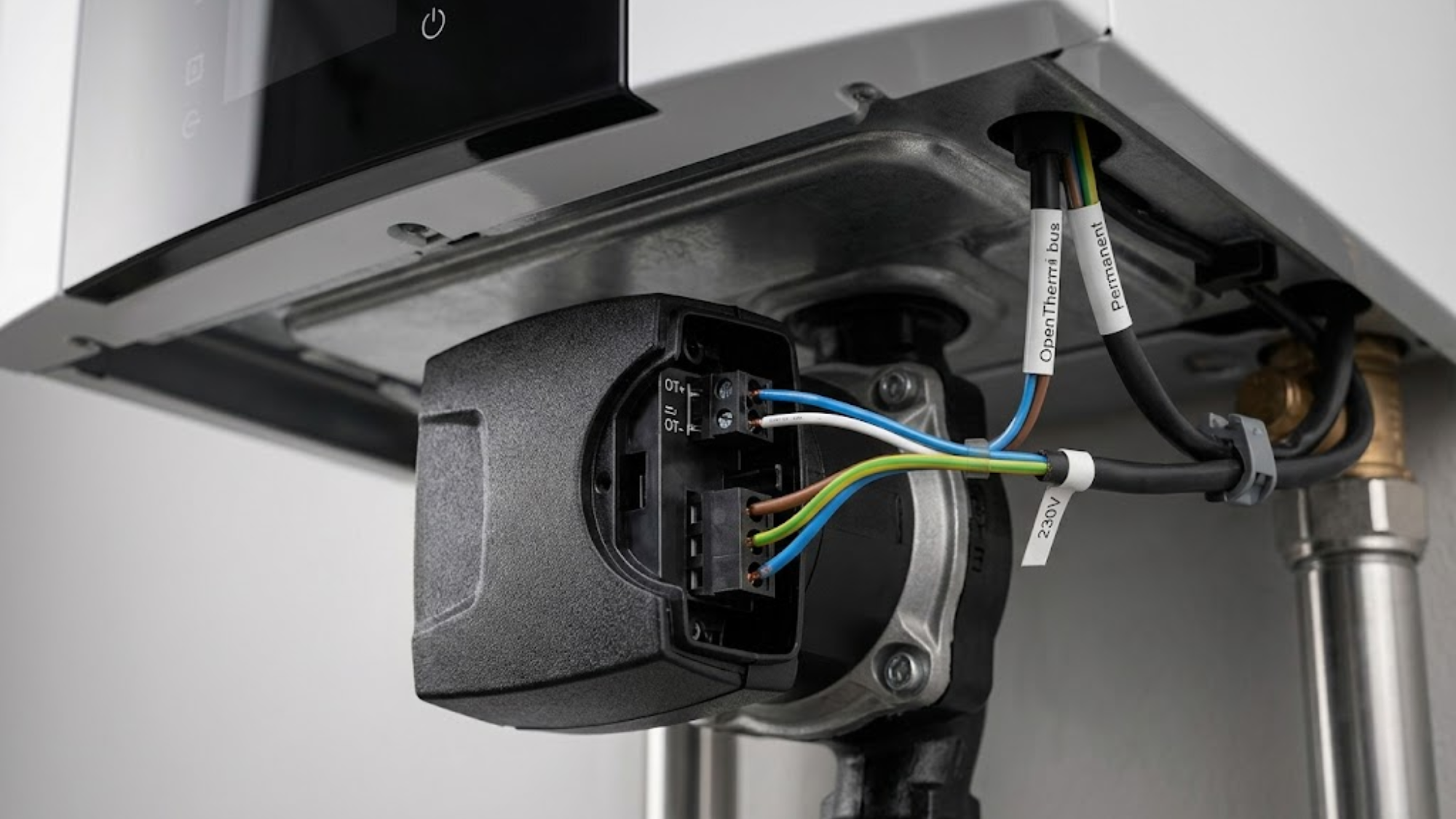
OpenTherm uses a polarity-insensitive two-wire connection, typically labelled OT+ and OT- or simply as terminals 1 and 2. The Wilo Para provides dedicated OpenTherm terminals separate from the power supply connections, streamlining the wilo para modulating pump integration process.
Standard installation connects the thermostat to the boiler's OpenTherm terminals, then branches from either device to the pump. Best practice dictates branching from the boiler terminals because it keeps all OpenTherm wiring in the mechanical room rather than requiring a return circuit to the thermostat location.
The pump requires a separate 230V power supply. Unlike traditional heating controls that send switched power from the boiler to the circulator, the Para must remain powered continuously to monitor network traffic. Connect permanent line voltage to the pump's power terminals rather than routing through the boiler's pump output terminals.
Configuration Parameters That Actually Matter
The unit ships with default settings suitable for most residential systems, but three parameters significantly impact performance.
The target temperature differential tells the pump what drop to maintain across the system. The default 20°C works for standard systems, but you should lower this to 15°C for systems with high-output emitters like panel radiators that need increased flow for proper heat distribution.
Establishing the correct minimum speed configuration is vital. The pump will not reduce below this percentage regardless of OpenTherm signals. Lower minimum speed configuration settings around 20-25% improve efficiency during low-load conditions but risk insufficient flow through some circuits.
Finally, the response time parameter controls how quickly the pump reacts to changes in the condensing boiler modulation level. You can adjust these settings directly on the pump fascia or by using a compatible heating control app for models equipped with wireless connectivity.
Performance Data From Field Installations
Field data shows average electrical consumption for these circulators decreases 43% compared to fixed-speed pumps in similar homes. This reduction comes primarily from lower speeds during partial load operation, which represents 85-90% of runtime in the UK climate.
On a recent residential project, an installer connected a high-end modulating pump to an older system built with oversized 40mm steel mains. Despite the pump's advanced technology, the excessive heating distribution thermal mass meant the system took hours to respond to simple temperature changes. It led to endless callbacks until the fundamental pipework issue was resolved. Technology cannot override physics.
Boiler cycling decreases noticeably when systems are piped correctly. Systems with fixed-speed pumps average 6.8 cycles per hour during mild weather operation. The same boilers with Para pumps average 4.7 cycles per hour under comparable conditions. Reduced cycling extends boiler life and improves seasonal efficiency by minimising purge losses.
Common Installation Mistakes
Connecting to boiler pump terminals seems logical, but it prevents the pump from monitoring OpenTherm bus communication when the boiler shuts down. The pump needs continuous power to maintain its learning algorithms and respond immediately when heat demand returns.
Incorrect temperature differential assumptions also create problems. Installers often leave the default 20°C setting without measuring actual system performance. Measure the actual differential during commissioning and adjust the pump setting to match reality.
Zone valve conflicts frequently cause issues when building plastic pipe systems. As zones close, the system pressure drop increases dramatically. The pump will reduce speed to maintain its setpoint, but if too many zones close simultaneously, flow through the operating zone may become insufficient. Always use the pump's minimum speed configuration settings or install an automatic bypass valve to prevent flow starvation.
When This Integration Makes Sense
While executing a flawless wilo para modulating pump integration requires a higher initial investment than installing a standard fixed-speed unit, the investment pays back through reduced operating costs and improved comfort.
The best candidates are new installations with properly sized distribution networks, condensing boilers with wide modulation ranges, and systems where consistent comfort is paramount. Conversely, retrofitting this technology onto poorly designed layouts or when using plastic pipe for central heating without proper hydraulic separation offers limited benefits.
Conclusion
OpenTherm integration gives circulators access to real-time data about heating demand and boiler output that was previously unavailable. The Wilo Para uses this information to match flow rates with the actual thermal load, eliminating the mismatch between boiler modulation and fixed-speed circulation that degrades comfort and efficiency in standard systems.
The technology works best in properly designed systems where the boiler, distribution, and emitters are correctly sized and balanced. If you are planning an OpenTherm upgrade and need assistance selecting the correct components, speak to our team for technical guidance and support.