

Wilo Yonos PICO: Auto-Adapt Setting And Pump Venting Sequence
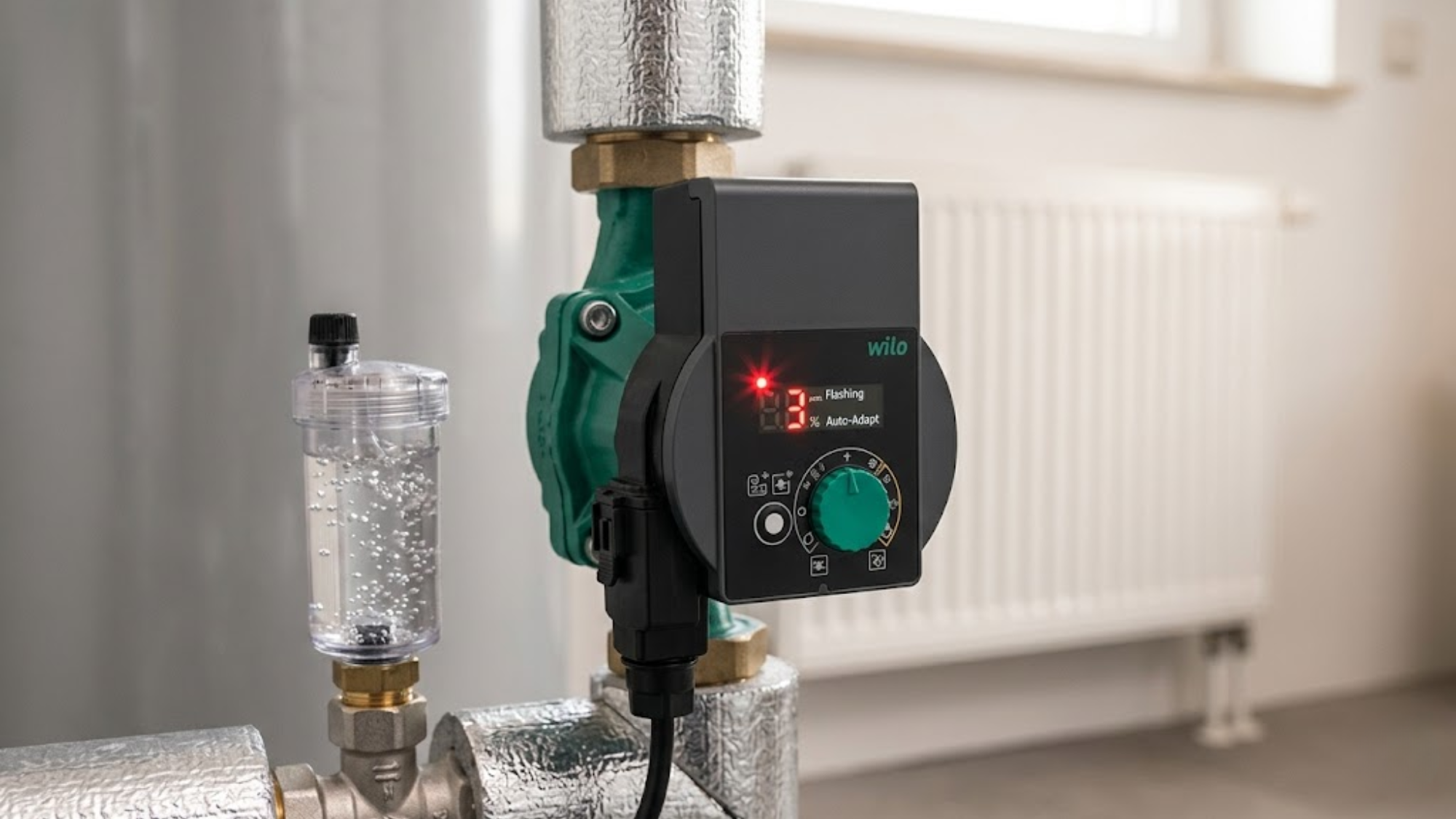
The Wilo Yonos PICO circulator pump includes two features that separate it from basic models. It features a specific wilo yonos pico auto-adapt setting that adjusts performance based on system demand, and a built-in venting sequence that purges air without manual intervention. Both features solve common installation headaches, but only if you understand how they actually work.
What Auto-Adapt Mode Actually Does
The wilo yonos pico auto-adapt setting monitors flow resistance in your heating system and adjusts the pump's differential pressure to match. Heating and Plumbing World supplies these units to professionals who rely on this automated technology to streamline commissioning. The pump starts at maximum output, then gradually reduces power as it detects consistent flow patterns.
Think of this auto-adapt mode like a modern automatic car transmission. Instead of you manually shifting gears as you climb a steep hill, the transmission senses the load and shifts for you, maintaining optimal RPM without over-revving the engine.
Here is what happens during the learning phase. The pump runs at full capacity for approximately 24 to 48 hours while measuring system resistance. It tracks pressure differentials across various operating conditions, including startup, steady state, and shutdown. Once it identifies the minimum pressure required to maintain circulation throughout the heating pipe systems, it locks into that setting.
This matters for two reasons. First, it cuts energy consumption by 20-30% compared to fixed-speed pumps running at constant high output. Second, it eliminates the noise and wear that comes from over-pumping. Sound levels frequently drop from 35 dB to under 25 dB once the learning cycle completes.
The catch is that the algorithm needs clean data to work properly. If your system has air pockets during the learning phase, the pump reads artificially high resistance and sets itself too high. You end up with a pump that learned to compensate for problems that shouldn't exist.
When Auto-Adapt Fails And How To Fix It
Three scenarios consistently cause the algorithm to misread system requirements. Trapped air in radiators or pipework makes the pump interpret air locks as high resistance zones. It maintains excessive pressure to overcome them, resulting in energy waste and potential noise issues even after air eventually works its way out.
Partially closed valves create another false reading. Unintended thermostatic radiator valve closure during the learning phase forces the pump to adapt to restricted flow. When the thermostatic radiator valves open fully later, you get inadequate circulation to those zones.
An undersized or waterlogged expansion vessel creates pressure spikes that confuse the algorithm. The pump sees inconsistent resistance patterns and settles on a higher-than-necessary operating point. Ensure the expansion vessel is correctly sized and charged.
The solution in each case involves resetting the sequence after fixing the underlying issue. Hold the mode button for 5 seconds until the LED flashes green twice. This clears the learned parameters and restarts the 24-hour to 48-hour learning cycle.
The Venting Sequence Explained
The pump includes a built-in automatic venting sequence that runs when you first power up the unit or manually trigger it. Understanding this process helps you know whether it's working or failing.
From minute zero to three, the pump runs at maximum speed in both directions, alternating every 10 seconds. This aggressive bidirectional flow turbulence dislodges air bubbles from the impeller chamber and pushes them toward the system's air vents.
Between minutes three and seven, the speed drops to 75% of maximum while still alternating direction. The slower speed allows smaller bubbles to coalesce into larger ones that vent more easily.
During the final three minutes, the pump runs at normal operating speed in the correct direction while monitoring for vibration signatures that indicate remaining air. If it detects continued air presence, the automatic venting sequence extends for another 5 minutes. The LED indicator flashes red during active venting, turns solid green when complete, and turns solid red if a problem is detected.
Why Manual Venting Still Matters
The internal sequences handle air in the pump body effectively, but they can't remove air from the broader system. You still need to manually vent the central heating radiators and high points in the pipework.
The most effective approach involves venting the system manually first. Then, trigger the pump's auto-vent sequence, and check the radiators again 24 hours later. This three-step process catches air that the pump dislodges from pipework during initial operation.
The bidirectional flow turbulence creates enough force to shake loose air bubbles that static filling misses. These bubbles migrate to radiators and automatic air vents over the first day of operation. A second manual vent after this migration prevents long-term circulation problems.
Setting The Pump Mode Correctly
The unit offers three operating modes beyond the primary wilo yonos pico auto-adapt setting: constant pressure, proportional pressure, and constant curve. Each suits different system types.
Constant pressure maintains a fixed differential pressure regardless of flow rate. Use this for systems with multiple zones controlled by two-port valves. When zones close, the pump maintains pressure at the open zones without over-pumping.
Proportional pressure reduces differential pressure as flow decreases. This works best for systems relying heavily on individual radiator valves, where the partial closure of multiple valves signals reduced demand. The pump drops pressure in response, saving energy during mild weather.
Constant curve follows a fixed performance curve, similar to traditional pumps. Professionals rarely recommend this mode, as it negates most of the pump's efficiency advantages.
Troubleshooting Common Auto-Adapt Issues
If the pump runs continuously at high speed, either the learning phase hasn't completed or the pump detected high resistance during learning. Check for closed valves, air locks, or undersized pipework. Reset the mode after fixing the issue.
On a recent commercial retrofit, an apprentice set the pump to learn while all the radiators were shut off for painting. The pump adapted to a completely restricted system. When the painters finished and opened the valves, the system starved for flow. A quick reset with the valves fully open fixed the issue, proving that timing is everything.
Inadequate circulation to some radiators indicates the pump learned during a period of unexpected thermostatic radiator valve closure. Reset the mode with all valves open, or switch to constant pressure mode and manually set the pressure level.
Excessive noise after learning completes means the pump adapted to temporary resistance that has since cleared. The now-excessive flow velocity creates the same bidirectional flow turbulence noise you hear during venting, but continuously at the valve seats. An undersized or waterlogged expansion vessel can also mimic this resistance. Reset the pump to relearn at correct resistance levels.
When The Venting Sequence Will Not Complete
If the LED continues flashing red beyond 15 minutes, the pump detects ongoing air ingress rather than residual air from filling. Three causes account for 90% of cases.
Negative pressure in the system often stems from a waterlogged expansion vessel, creating suction that pulls air past pump seals and valve glands. Install or recharge the vessel to maintain positive pressure throughout the system.
A leaking automatic air vent introduces air faster than the pump can expel it. Temporarily close or remove automatic air vents during the automatic venting sequence, then reopen them once the sequence completes.
Cavitation occurs if system pressure drops below the pump's minimum requirement, causing water to vaporise at the impeller. The pump reads this as air and extends the sequence indefinitely. Increase system pressure or install the pump at a lower point in the system.
Optimising Auto-Adapt Performance
To get the most accurate learning profile, complete all manual venting before starting the pump. Open all thermostatic valves fully during the learning period to prevent any artificial thermostatic radiator valve closure from skewing the data. Ensure the system runs through multiple heat cycles. Avoid adjusting valves or adding radiators during the 48-hour learning window.
The pump learns most effectively when it experiences the full range of normal operating conditions. If it learns during unusually cold weather when all zones run continuously, it won't optimise for milder conditions when zones cycle on and off. Commissioning systems during shoulder seasons provides the best baseline, as the system experiences moderate, varied demand.
Comparing Auto-Adapt To Manual Settings
Using the automated features saves approximately 15 minutes of commissioning time per pump by eliminating manual performance adjustment. More importantly, it adapts to system changes over time, whether radiators are added, valves are replaced, or push fit plumbing fittings are modified.
Manual settings require recommissioning after any significant system change. The automated mode handles this automatically, though you should still trigger a reset after major modifications to accelerate the relearning process.
The energy savings difference between well-optimised manual settings and automated mode typically falls within 5%. The real advantage comes from eliminating poorly optimised manual settings. Systems frequently run 40% above necessary pressure because installers set pumps conservatively high to be safe. The automated features prevent this waste.
Conclusion
The wilo yonos pico auto-adapt setting and venting features deliver their promised benefits only when the underlying system is properly prepared. The algorithms cannot compensate for air locks, closed valves, or pressure problems. They simply learn to work around them, locking in inefficiency.
Treat these features as an optimisation tool, not a substitute for proper commissioning. Vent the system thoroughly, verify all valves operate correctly, and confirm adequate system pressure before starting the learning sequence. When both features work with properly prepared systems, the unit reduces energy consumption, eliminates noise, and maintains performance without ongoing adjustment. If you need assistance configuring these settings, reach out to our experts for technical guidance.