

Wilo-Z Nova: Domestic Hot Water Secondary Circulation Installation
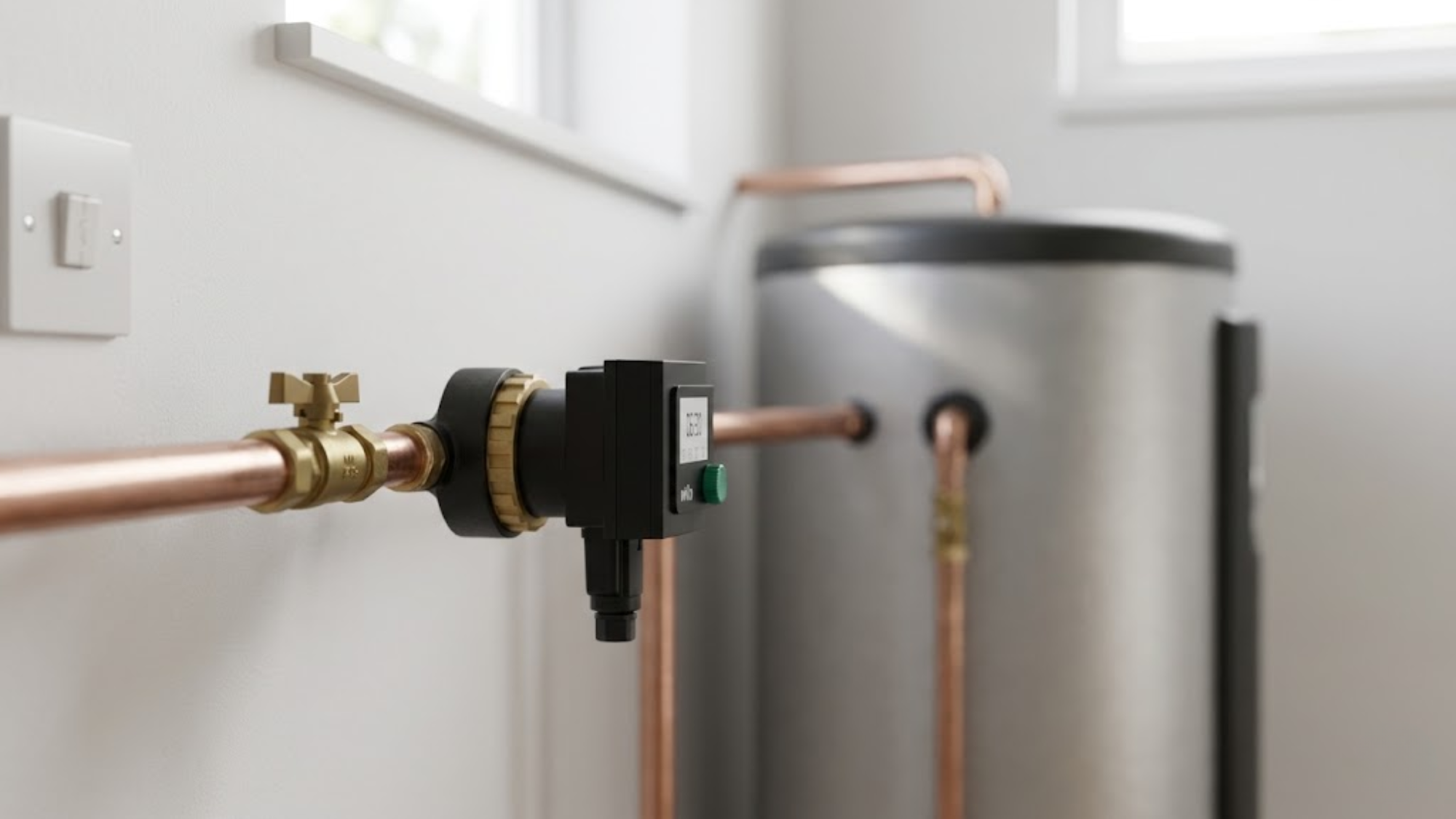
Waiting thirty seconds for hot water at a tap wastes roughly 2 litres per person per day. Across a 200-unit apartment building, that is 146,000 litres annually, which is enough to fill an Olympic swimming pool halfway. The Wilo-Z Nova eliminates this waste by maintaining continuous circulation. Executing a professional wilo-z nova domestic hot water secondary circulation installation ensures hot water delivery within 3 seconds at any outlet.
System Overview And Components
The unit operates as a dedicated wet rotor secondary circulation pump, distinct from primary heating pumps. While primary pumps move water from the boiler or heat exchanger to storage vessels, the Z Nova circulates hot water through distribution pipework back to the cylinder. Heating and Plumbing World provides these compact units for both commercial and residential projects demanding high efficiency.
The unit includes three core components: the wet rotor secondary circulation pump itself, integrated control electronics, and a thermostatic valve assembly. The pump housing measures 180mm x 165mm x 145mm and weighs 2.8kg when dry. Maximum operating pressure reaches 10 bar, which is more than sufficient for most hot water tank applications. Check the package contents before starting installation, as missing parts delay commissioning by several days.
Pre-Installation Site Assessment
Survey the installation location for pipe sizing compatibility, electrical supply proximity, and access. The Z Nova handles flow rates from 0.5 to 3.5 m³/h. Most domestic secondary circuits use 22mm or 28mm copper pipe for distribution loops up to 50 metres. Accuracy in measuring the secondary circuit pipework length including vertical rises is essential for performance.
A four-storey building with bathrooms stacked vertically creates approximately 45 metres of secondary circuit. Buildings exceeding this secondary circuit pipework length typically require 35mm pipe to maintain adequate flow velocity and prevent temperature stratification. Positioning the pump within 1.5 metres of a fused spur ensures a reliable connection for your hot water storage system. Always allow for maintenance access, as boxed-in units add significant time to routine service visits.
Mounting And Pipework Connection
Install the pump on the return leg of the secondary circuit, immediately before the hot water cylinder connection. This location ensures the pump operates at the coolest point in the system, extending motor life by 30 to 40% compared to flow-side mounting.
Think of secondary circulation like a hotel room's instant-on TV standby mode. The TV stays on a very low-power standby so it is ready to display a picture the moment you press the remote. Similarly, the pump keeps a small amount of hot water moving so it's ready at the tap the moment you open it, rather than making the system re-boot by flushing out cold water first.
The motor shaft must remain horizontal. Vertical shaft orientation causes premature bearing wear and voids the manufacturer warranty. Use a spirit level across the pump body to verify alignment, as even a 5-degree deviation affects bearing lubrication. Clean pipe ends thoroughly before connection to prevent swarf from damaging ceramic bearings. Use high-quality hot water cylinder connections for a secure, leak-free fit.
Electrical Connection And Control Wiring
Isolate the electrical supply before making any connections. The Z Nova requires a permanent live, switched live, neutral, and earth connection. Standard wiring connects the brown cable to the switched live terminal via a fused spur or programmer output.
Timer integration is vital for overall system efficiency. Running circulation 24/7 increases energy consumption by 340 to 420 kWh annually in a typical 150-unit building. Integrating a combi boiler programmer to match building usage patterns is a standard efficiency upgrade.
The Z Nova includes an integrated aquastat setting that stops circulation when return temperature exceeds the setpoint. Adjust the dial on the pump head to your target temperature, which is typically 55°C. This integrated aquastat setting cuts pump runtime by 40 to 60% compared to timer-only operation. Using an accurate heating timer control further optimises these cycles and prevents unnecessary electricity draw.
Commissioning And Speed Adjustment
Fill the system slowly, venting air from high points as the water level rises. Open the vent screw on the pump head until water flows without bubbles, then close it finger-tight. Start the pump at maximum speed to verify flow at the furthest tap. Temperature should reach 50°C within 90 seconds.
Reduce pump speed incrementally while monitoring temperature delivery. The objective is the minimum speed that maintains temperature throughout the circuit. Most installations achieve this at speed setting 2. Measure the temperature at the pump return connection; the differential between flow and return should be 8 to 12°C. Fine-tuning the heating valve control on separate branches helps equalise return temperatures across the building and prevents cold spots.
System Performance Verification
Run the system for 48 hours before final verification. This period stabilises temperatures and reveals intermittent programming or control faults. Test hot water delivery at the three furthest taps during programmed operating hours. Acceptable performance delivers hot water within 5 seconds at all locations.
On a recent commercial project involving a 200-unit apartment block, the facility manager insisted on running the secondary circulation 24/7 to be safe against temperature complaints. After one month, the electricity bill for the pumps alone was 40% higher than projected. We configured the integrated aquastat setting and established occupancy-based timers, reducing daily energy consumption from 3.2 kWh to just 1.4 kWh while maintaining perfect hot water delivery times. It was a clear lesson that constant run is rarely the most efficient path.
Verify that water cools gradually when circulation stops. Sudden temperature loss indicates a system leak or a failed check valve. Monitoring daily energy consumption helps confirm the wilo-z nova domestic hot water secondary circulation setup is operating within expected parameters.
Maintenance Requirements And Troubleshooting
Schedule annual maintenance inspections covering pump operation and electrical connections. Sample the system water for debris. Black water indicates magnetite formation from corrosion, while pink or orange water suggests bacterial contamination requiring treatment.
Address any legionella risk assessment temperature requirements during these visits. If a legionella risk assessment temperature requires 60°C or higher, adjust the aquastat setting accordingly to ensure compliance.
Common faults include pumps running with no circulation, often caused by closed isolation valves or a blocked strainer. If a pump cycles rapidly, it usually indicates air locks or a failed check valve allowing reverse circulation. Bearing noise developing after 3 to 5 years in hard water areas points to scale accumulation. Descale the pump chamber or replace the motor assembly if scaling is severe.
Conclusion
The wilo-z nova domestic hot water secondary circulation installation process centres on correct hydraulic positioning and systematic commissioning. These factors determine whether the system delivers instant hot water efficiently or wastes energy through excessive circulation.
Most installation problems trace to inadequate pipe cleaning or incorrect pump orientation. Address these elements during the initial setup rather than troubleshooting them after commissioning. Properly maintained systems operate reliably for 8 to 10 years. If you need assistance with aquastat configurations or secondary circuit sizing, reach out to our experts for technical guidance today.