
 -
- Worcester 87161423000 4 Bar Pressure Gauge: Domestic vs Commercial Applications
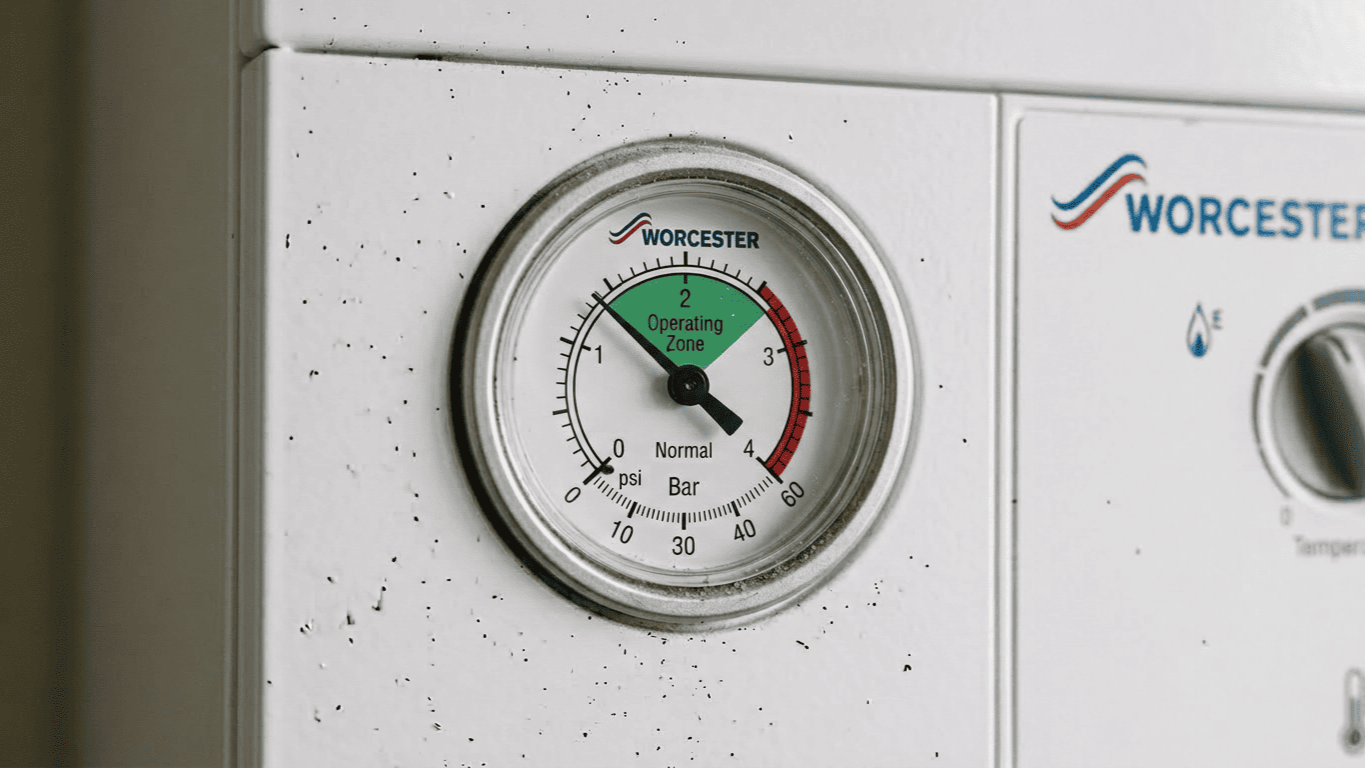
The Worcester 87161423000 4 bar pressure gauge sits in that curious middle ground where domestic heating meets light commercial work. It's a component most homeowners never notice until it fails, yet it's one of the first things a competent heating engineer checks during a service call. This specific gauge isn't just another dial on a boiler. It's designed to handle the pressure ranges common in Worcester Bosch systems, and understanding where it fits - and where it doesn't - can save you from either over-specifying for a simple domestic job or under-specifying for a commercial installation that demands more robust monitoring.
What Makes the 87161423000 Different
Worcester Bosch designed this gauge for their mid-range boiler systems, primarily targeting domestic installations with occasional light commercial crossover. Heating and Plumbing World stocks a full range of genuine Worcester parts to ensure your system maintains its original integrity. The 4 bar maximum reading tells you immediately what it's built for - systems that operate within typical domestic heating parameters. Most modern combi boilers run between 1.0 and 1.5 bar during normal operation. The 4 bar ceiling provides an adequate safety margin without the bulk and cost of commercial-grade gauges that read up to 10 or 16 bar.
The gauge uses a Bourdon tube mechanism, which remains the industry standard for reliability. Think of a Bourdon tube like one of those paper party blowouts; when you blow air into it, the coiled tube uncurls. In this gauge, when pressure increases, the curved metal tube straightens slightly, moving the needle across the dial. It's simple physics that's been proven over decades.
- Maximum reading: 4 bar
- Dial diameter: 40mm
- Connection thread: 1/8" BSP
- Case material: ABS plastic
- Compatibility: Suitable for water and glycol mixtures
- Operating temperature range: -20°C to +60°C
Domestic Application: Where This Gauge Excels
In residential settings, the 87161423000 performs exactly as intended. Homeowners need a clear, readable gauge that shows whether their system pressure sits in the safe zone - typically marked with a green band between 1 and 2 bar. The compact 40mm dial fits neatly on boiler fronts without dominating the visual space. For properties with the boiler tucked in a kitchen cupboard or utility room, this matters more than you'd think. Nobody wants a gauge that looks like it belongs in a submarine.
On a recent residential service call, an apprentice replaced a failed gauge but didn't check why the needle had stuck in the first place. It turned out a failed Worcester expansion vessel was causing massive pressure spikes that eventually bent the internal mechanism. Replacing the gauge without addressing the vessel meant the new part was destined to fail within weeks.
- Sized appropriately for typical system volumes
- Clear colour-coded zones for homeowner monitoring
- Cost-effective replacement during boiler servicing
- Readily available through the Worcester Bosch parts network
- Matches OEM specifications for warranty compliance
The gauge handles the pressure fluctuations common in domestic systems without issue. When the heating fires up, pressure rises slightly as water expands. When it cools, pressure drops. The 87161423000 tracks these changes accurately enough for homeowner monitoring and engineer diagnostics.
When Domestic Crosses Into Light Commercial
Here's where things get interesting. Many heating engineers use this gauge in light commercial settings - small offices, retail units, and cafes - where the heating system resembles an oversized domestic setup rather than a true commercial installation. A three-bedroom house might have a 24kW combi boiler, while a small shop with a flat above might run a 35kW system boiler with a 150-litre Kingspan direct pressurised cylinder.
The pressure dynamics don't change dramatically in these cases, so the gauge continues to function within its design parameters. We've installed this gauge on systems serving small commercial premises countless times. The key's understanding system volume and operating pressure, not just the building's classification for business rates.
- Total system volume staying below 200 litres
- Operating pressure remaining under 2.5 bar
- Minimal pressure surges from rapid heating cycles
- Indoor installation protecting the gauge from environmental extremes
- Regular servicing maintaining calibration accuracy
Where Commercial Demands Exceed Domestic Capabilities
True commercial installations require different thinking. A hotel with multiple floors, a school with radiators across several buildings, or a warehouse with high-level unit heaters - these systems operate in a different league. Commercial systems often run at higher pressures to overcome elevation changes and pipe friction across longer distances.
A five-storey building needs sufficient pressure at ground level to push water to radiators on the top floor, accounting for roughly 0.1 bar per metre of height. The 87161423000 maxes out at 4 bar. For a system designed to operate at 3 bar with surge allowance, you've consumed most of the gauge's range before adding any safety margin. That's poor engineering practice. Larger systems may require a more robust Zilmet Hy-Pro expansion vessel paired with a high-pressure commercial gauge.
- Gauges reading to 10 bar minimum
- Stainless steel cases resisting corrosion
- Glycerine-filled dials damping vibration
- Larger dial faces (63mm or 100mm) for visibility at distance
- Certification for commercial pressure vessel regulations
- Isolation valves allowing gauge replacement without system drainage
The Calibration Question
Domestic gauges like the 87161423000 aren't designed for precision instrument work. They're accurate enough for their purpose - showing whether system pressure sits in the acceptable range - but they're not calibrated to laboratory standards. Expect accuracy within ±3% of full scale, meaning the needle could read 0.12 bar high or low at any point.
For a homeowner checking if they need to top up the system, this imprecision doesn't matter at all. For a commercial building management system logging pressure data, it's unacceptable. Commercial applications increasingly use digital pressure transducers feeding building management systems. These provide continuous monitoring, data logging, and alarm functions when pressure drifts outside parameters. A mechanical gauge serves as backup, not primary monitoring.
Installation Considerations Across Applications
Fitting a pressure gauge sounds straightforward - thread it into the tapping point and tighten. But proper installation affects longevity and accuracy significantly. You'll want to ensure the Worcester temperature sensor and other diagnostic tools are also correctly positioned for accurate readings.
- Mount gauge vertically with dial face forward
- Apply PTFE tape to threads, avoiding the first two threads
- Tighten finger-tight plus one quarter turn with a spanner
- Ensure gauge sits in a position readable without contortions
- Avoid positions where boiler casing might contact the dial
- Install isolation valves allowing gauge removal under pressure
- Consider syphon tubes for high-temperature applications
- Use mounting brackets for gauges in vibration-prone locations
- Position gauges at eye level for accurate reading
- Protect outdoor gauges with weather-resistant enclosures
Cost Analysis: Domestic vs Commercial Gauge Economics
The 87161423000 retails around £15–25 through heating merchants, positioning it as a consumable component rather than a precision instrument. For domestic work, this price point makes sense - it's cheaper to replace than recalibrate. Commercial-grade gauges start around £40 and climb quickly. A 100mm stainless steel glycerine-filled gauge with an isolation valve and syphon tube might cost £120–150.
That's a significant jump, but it reflects the durability and accuracy commercial applications demand. For safety compliance in larger plants, you might also need an IMIT LS1 limit thermostat alongside your pressure monitoring equipment.
- Domestic: Initial cost + potential replacement = £30–50 over 10 years
- Light Commercial: Initial cost + possible recalibration = £60–100 over 10 years
- Full Commercial: Higher initial cost but longer service life = £120–200 over 15+ years
Real-World Performance: What Engineers Report
Speak to heating engineers about the 87161423000, and you'll hear consistent feedback. It does exactly what Worcester Bosch designed it for, provided you use it within those parameters. Failures typically stem from misuse rather than design flaws. Installing this gauge on a system that regularly sees pressure spikes above 3 bar will shorten its life.
The Bourdon tube fatigues, the needle sticks, and accuracy degrades. In proper domestic applications, these gauges routinely last the boiler's service life. That's 10–15 years of daily thermal cycling, seasonal pressure changes, and occasional overpressure events when homeowners overfill the system. The gauge's plastic case occasionally cracks if overtightened during installation, particularly in cold weather when the material becomes more brittle. This is an installer error, not component failure.
Conclusion
The Worcester 87161423000 4 bar pressure gauge serves its domestic market well. It provides clear, reliable pressure indication for homeowners and heating engineers working on residential systems. Its specifications match the demands of typical domestic heating installations, and its price point reflects its role as a functional component rather than a precision instrument.
Light commercial applications with similar pressure profiles can use this gauge successfully, but true commercial installations require more robust specifications. Understanding these boundaries prevents under-specifying equipment that will fail prematurely or over-specifying components that add unnecessary cost. If you have questions about specific applications, feel free to contact our technical team for expert advice.