

Worcester Bosch Junior Boiler Parts Guide
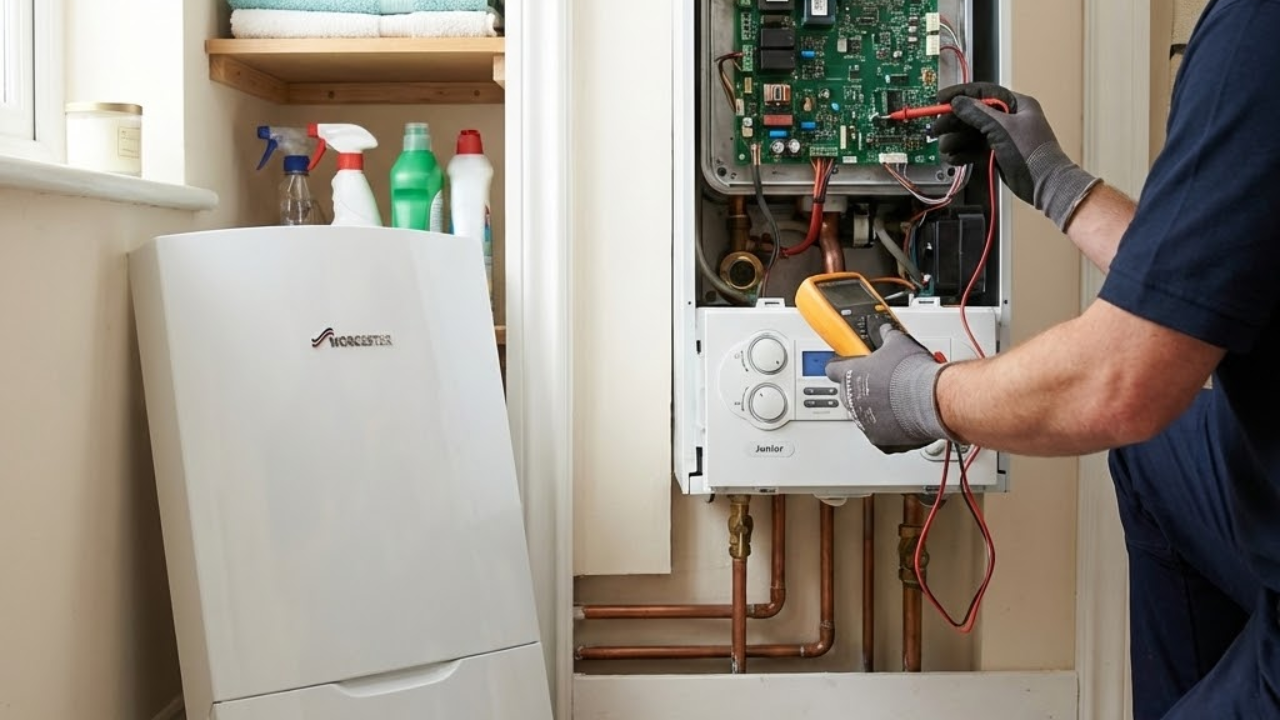
The Worcester Bosch Junior range has been a workhorse in the UK heating industry for decades. If you're working on an older property or maintaining a legacy system, chances are you'll encounter one of these boilers sooner or later. Understanding the parts architecture of these units isn't just about fixing what's broken. It's about keeping a reliable heating system running efficiently for years to come.
Worcester Bosch built a reputation on durability, but even the most robust boiler needs maintenance. The Junior range, particularly models from the 1990s and early 2000s, still operates in thousands of homes across the country. When a component fails, knowing exactly what you're dealing with makes the difference between a two-hour callout and a three-day parts chase.
Understanding the Worcester Bosch Junior Range
The Junior series encompasses several models, each designed for specific applications. The Junior 24i and Junior 28i were combi boilers that dominated the domestic market, whilst the Junior 12/15 SE served as a system boiler for properties with separate hot water cylinders.
These boilers share common design principles but differ in heat output and component specifications. A Junior 24i delivers roughly 24kW of heating power, making it suitable for smaller homes with one bathroom. The 28i steps up to handle larger properties with higher demand.
Most engineers remember these boilers for their distinctive blue casing and relatively straightforward internal layout. Unlike modern condensing boilers with complex PCBs and multiple sensors, the Worcester Bosch Junior range uses more mechanical components, which means repairs are often more tactile and diagnostic work relies heavily on understanding hydraulic and gas principles.
Core Components and Common Failures
Every Worcester Bosch Junior boiler contains several critical systems that work together to deliver heat. When one component fails, it often creates a cascade effect that can confuse diagnosis if you don't understand the sequence.
The primary heat exchanger is where combustion heat transfers to the heating water. In Worcester Bosch Junior models, these are typically copper with brazed fins, robust but vulnerable to scale buildup in hard water areas. You'll know it's failing when you see pinhole leaks or notice the boiler cycling on the overheat thermostat.
A blocked heat exchanger restricts water flow, causing the boiler to overheat and lock out. It's like trying to cool an engine with the radiator half-blocked. The temperature spikes before the system can dissipate the heat. If you're in a hard water area and the boiler hasn't been inhibited properly, expect heat exchanger issues after 8-10 years.
For comprehensive Worcester Bosch Junior parts and legacy boiler component support, Heating and Plumbing World stocks the spares that keep these reliable systems operational.
Replacement requires draining the system, disconnecting gas and water connections, and carefully removing the combustion chamber assembly. It's not a quick job, and you'll want to flush the system thoroughly before fitting a new exchanger. Many engineers use this opportunity to add inhibitor and fit a magnetic filter if one isn't already present.
Pumps and Circulation
The circulation pump on a Worcester Bosch Junior is usually a Grundfos three-speed pump or similar three-speed unit. These pumps are reliable, but they don't last forever. Bearings wear out, seals leak, and occasionally the rotor seizes completely.
Signs of pump failure include cold radiators whilst the boiler fires normally, unusual noise from the pump housing (grinding or squealing), leaking from the pump body or connections, and boiler overheating because water isn't circulating.
Replacing a pump on a Junior is straightforward. Isolate the valves, drain down, and swap it out. The challenge comes when the pump hasn't been changed in 15 years and the isolation valves won't close properly. Always check valve operation before you start, and have spare washers and PTFE tape ready.
For pump replacements on Worcester Bosch Junior systems, Grundfos three-speed circulators offer reliable performance with readily available support.
Speed settings matter. If the system has been balanced for a pump running on speed two, and you fit a new pump set to speed three, you'll upset the hydraulic balance. Make a note of the original setting before removal.
The gas valve regulates fuel supply to the burner based on signals from the control system. Worcester Bosch Junior boilers typically use Honeywell or SIT gas valves, depending on the model year. These valves are electromechanical devices that can fail in several ways.
A stuck gas valve won't open, preventing ignition. A valve that fails to close properly creates a dangerous situation, though multiple safety interlocks should prevent gas flow without proper ignition. If you're diagnosing a no-heat situation and you've confirmed power to the valve but no gas flow, the valve itself is the likely culprit.
Gas valve replacement requires Gas Safe registration. This isn't a part you can legally fit without the proper qualifications. The work involves isolating the gas supply, disconnecting electrical connections, removing the old valve, fitting the new one, and then conducting proper gas tightness and combustion checks.
Honeywell gas valves are known for reliability, but they're not immune to failure. Electrical coils can burn out, diaphragms can perish, and mechanical linkages can stick. Always verify the fault before ordering a replacement. Gas valves aren't cheap, and misdiagnosis is costly.
Ignition and Flame Detection Systems
Worcester Bosch Junior boilers use either a pilot light system (older models) or electronic ignition (later versions). Understanding which system you're working with determines your diagnostic approach.
Older Worcester Bosch Junior models maintain a constant pilot flame that ignites the main burner when there's demand. The pilot assembly includes a thermocouple, a safety device that generates a small electrical current when heated by the pilot flame. This current holds the gas valve open. If the pilot goes out, the thermocouple cools, the current stops, and the gas valve closes.
Thermocouple failure is one of the most common faults on older boilers. The symptoms are clear: the pilot lights when you hold the control knob down, but goes out as soon as you release it. Replacement is simple. Disconnect the old thermocouple, unscrew it from the pilot assembly, fit the new one, and reconnect to the gas valve.
Position matters. The thermocouple tip must sit properly in the pilot flame. Too far away and it won't heat sufficiently to generate the required voltage. Too close and it can overheat and fail prematurely. There's usually a bracket that holds it in the correct position, but these can corrode or get knocked out of alignment.
Later Worcester Bosch Junior models use electronic ignition with a spark electrode and flame rectification for detection. When the boiler calls for heat, the control board sends voltage to the spark electrode, which creates a spark to ignite the gas. Once lit, the flame itself conducts a small current between the electrode and the burner, confirming successful ignition.
If the spark electrode is fouled with carbon deposits or positioned incorrectly, you'll get either no spark or a spark that doesn't ignite the gas. The electrode gap should be approximately 3-4mm from the burner. Check the installation manual for the specific model you're working on.
Flame rectification failures often result from a dirty or corroded flame sensing electrode. Unlike a separate sensor, many systems use the same electrode for both ignition and detection. Clean it with fine wire wool and check the gap. If the boiler still won't run, test the current flow during combustion. You should see a microamp reading that confirms flame detection.
Expansion Vessels and Pressure Relief
The expansion vessel absorbs the increased volume when water heats up in a sealed system. It's a steel tank with a rubber diaphragm inside. One side contains water from the heating system, the other side contains air or nitrogen at a pre-set pressure.
Signs of expansion vessel failure include pressure gauge rising to 3 bar or higher when the system heats up, pressure relief valve discharging regularly, and boiler losing pressure overnight (if the diaphragm has ruptured).
Testing an expansion vessel requires isolating the boiler, draining the system pressure to zero, and checking the air pressure on the vessel using a tyre pressure gauge on the Schrader valve. It should read approximately 1 bar (or whatever the manufacturer specifies, check the data badge). If it's lost pressure or you hear water when you press the valve, the diaphragm has failed.
For expansion vessel replacements on Worcester Bosch Junior installations, Altecnic Ltd supplies quality vessels compatible with legacy heating systems.
Replacement involves isolating the system, draining down, disconnecting the vessel, and fitting a new one. Some vessels are internal (requiring significant disassembly), whilst others are external and easily accessible. The Worcester Bosch Junior range typically uses external vessels, making replacement relatively straightforward.
Think of the expansion vessel like the suspension on a car. It absorbs shocks in the system. Without it functioning properly, pressure spikes can damage components, cause leaks, and trigger safety lockouts. It's a critical component that often gets overlooked during routine maintenance.
Thermostats and Temperature Sensors
Temperature control in a Worcester Bosch Junior boiler relies on several sensors and thermostats working together. The flow temperature sensor tells the control system how hot the water leaving the boiler is. The overheat thermostat acts as a safety cutout if temperatures exceed safe limits.
Modern Worcester Bosch Junior models use NTC thermistors (Negative Temperature Coefficient thermistors), sensors whose electrical resistance changes with temperature. The control board monitors this resistance to determine water temperature and modulate the burner accordingly.
When a flow sensor fails, you might see error codes, the boiler might not fire at all, or it might run continuously without reaching temperature. Testing requires a multimeter to measure resistance across the sensor terminals and compare the reading to the manufacturer's specification at a given temperature.
Sensor replacement is usually straightforward. They thread into the boiler pipework with a compression fitting or O-ring seal. Always use a new seal when refitting, and don't overtighten. You're sealing against the O-ring, not the threads. A common mistake is overtightening and cracking the sensor housing.
For temperature control components and sensor replacements, brands like Danfoss manufacture compatible solutions for Worcester Bosch Junior systems.
The overheat thermostat is a safety device, typically a mechanical switch that opens if the boiler temperature exceeds approximately 90-95°C. It's a failsafe that prevents dangerous overheating if the main control system fails or water circulation stops.
If your Worcester Bosch Junior is locking out and you've ruled out other causes, check whether the overheat thermostat has tripped. There's usually a manual reset button, but don't just reset it and walk away. If it's tripped, there's a reason. Check for circulation problems, blocked heat exchangers, or faulty pumps before putting the boiler back into service through overheat thermostat testing.
Replacing an overheat thermostat requires draining the system, removing the old stat from its pocket in the boiler, and fitting the new one with thermal paste to ensure good heat transfer. These components are safety-critical. Use genuine Worcester Bosch parts, not pattern alternatives.
PCBs and Control Boards
The printed circuit board (PCB) is the brain of the boiler, controlling ignition sequence, monitoring sensors, and managing safety interlocks. Worcester Bosch Junior boilers use relatively simple PCBs compared to modern condensing boilers, but they can still fail.
Common PCB failure symptoms include no display or power to the boiler, intermittent operation or random lockouts, incorrect fault codes that don't match the actual problem, and PCB relay failures preventing the pump or gas valve from operating.
Diagnosing PCB faults requires systematic testing. Check the power supply first. Ensure 230V is reaching the board. Test the fuse on the PCB itself. Check for obvious signs of damage like burnt components, corrosion, or water ingress.
Many PCB failures are actually caused by other component faults. A failing pump that draws excessive current can damage the PCB relay. Water leaks can corrode connections and create short circuits. Before condemning a PCB, verify that all other components are functioning correctly.
PCB replacement is expensive, often costing £200-400 depending on the model. Some engineers offer PCB repair services, replacing individual components like capacitors or relays. This can be cost-effective but requires specialist knowledge and equipment.
For control boards and electronic components, manufacturers like Honeywell supply compatible controls that integrate with Worcester Bosch Junior systems.
Sourcing Worcester Bosch Junior Parts
Finding parts for older Worcester Bosch Junior boilers can be challenging. Worcester Bosch maintains spares availability for discontinued models, but not indefinitely. For boilers over 15 years old, some components may be obsolete.
Key sourcing strategies include using the boiler serial number to identify the exact model and year, checking Worcester Bosch technical documentation for part numbers, considering pattern parts for non-safety-critical components (pumps, vessels), and always using genuine parts for gas controls, PCBs, and safety devices.
Many engineers keep a stock of common wear items (thermocouples, electrodes, pressure switches) to avoid return visits. For more expensive components like heat exchangers or PCBs, it's worth confirming the diagnosis before ordering.
On a particularly frustrating job, an engineer spent two days chasing an intermittent fault on a Worcester Bosch Junior 24i. The boiler would fire for ten minutes, then lock out with a flame failure code. New thermocouple, cleaned electrodes, tested gas valve, all fine. Finally discovered the GC number identification revealed it was actually a slightly different variant than assumed, using a different PCB with known relay issues. Correct GC number identification led to the right PCB, problem solved. That's why GC number identification matters so much on these legacy systems.
Maintenance and Preventative Care
Proper maintenance extends the life of Worcester Bosch Junior boilers significantly. An annual service should include combustion analysis to ensure efficient, safe operation, heat exchanger inspection for scale buildup or corrosion, pump operation check including noise and vibration assessment, expansion vessel pressure test, safety device testing (overheat stats, pressure relief valves), electrode and burner cleaning, and system water quality check and inhibitor top-up.
Scale buildup is the biggest killer of Worcester Bosch Junior boilers in hard water areas. A heat exchanger that's 50% blocked with scale loses efficiency and overheats, causing premature component failure. If you're maintaining a Worcester Bosch Junior in a hard water area, consider fitting a scale inhibitor or magnetic filter if one isn't already present.
System inhibitor is crucial. Without proper corrosion protection, internal components corrode, creating sludge that blocks pipes and damages pumps. Check inhibitor concentration annually and top up as needed. If the system water is black or rusty, it needs a powerflush before you fit any new components.
When Repair No Longer Makes Sense
There comes a point with any boiler where repair costs exceed the value of the unit. For a Worcester Bosch Junior that's 15-20 years old, you need to have an honest conversation with the customer about replacement versus repair.
Consider replacement when the heat exchanger has failed (often £300-500 in parts alone), multiple components need replacing in quick succession, parts are becoming difficult to source, the boiler efficiency is significantly lower than modern alternatives, or the customer is planning to stay in the property long-term.
A modern condensing boiler will be 25-30% more efficient than an old Worcester Bosch Junior, potentially saving £200-300 per year on gas bills. Over a 10-year period, that efficiency saving alone justifies replacement, even if the old boiler is still functioning.
However, if a Worcester Bosch Junior needs a £50 thermocouple or a £150 pump, and the customer is on a tight budget or planning to move soon, repair makes sense. It's about giving honest advice based on the specific situation.
Diagnostic Approach for Common Faults
When you're called to a faulty Worcester Bosch Junior, a systematic approach saves time and prevents misdiagnosis. Start with the obvious and work towards the complex.
For no ignition: check power supply and fuse, check room thermostat is calling for heat, verify gas supply is on, check for error codes or lockout indicators, test pump operation, check gas valve is opening, and verify ignition system is functioning.
For overheating: check pump is running and not seized, verify water circulation through radiators, check for blocked heat exchanger, test overheat thermostat hasn't tripped, and verify expansion vessel is functioning.
For pressure loss: check system pressure is correct, check for visible leaks at radiator valves and pipework, test pressure relief valve isn't passing, check expansion vessel diaphragm hasn't failed, and look for leaks at pump and boiler connections.
For unusual noise: check for air in the system, verify pump isn't cavitating, check for scale buildup (kettling), and inspect for loose components.
Having a logical diagnostic sequence prevents the trap of replacing components randomly until the problem goes away. It's also easier to explain your findings to the customer when you've followed a clear process.
Conclusion
The Worcester Bosch Junior range represents a generation of boilers built when reliability and serviceability were paramount. Whilst they lack the efficiency and sophistication of modern condensing boilers, their straightforward design makes them relatively easy to diagnose and repair for engineers who understand the fundamentals.
Keeping these boilers running requires access to the right parts, proper diagnostic skills, and an understanding of when repair makes economic sense versus replacement. Whether you're fitting a new thermocouple or advising a customer about a heat exchanger failure, your expertise ensures their heating system continues to deliver comfort reliably.
The Worcester Bosch Junior models taught a generation of engineers the fundamentals of boiler operation, with their mechanical simplicity and logical fault patterns. Understanding heat exchanger sections construction, proper overheat thermostat testing procedures, thermocouple failure diagnosis, and accurate GC number identification separates competent servicing from guesswork.
For Worcester Bosch Junior parts and technical support, contact us. We stock a comprehensive range of spares for current and legacy Worcester Bosch models, helping you complete repairs efficiently and keep your customers warm.